Australian education is becoming more dynamic than ever and classrooms, as a key factor, do not remain the sole domains in which learning occurs. Modern students require exposure to different settings, real-life problem-solving and practical interactions. Curriculum-linked field experiences come in handy there. These practical learning experiences can expand the curriculum beyond textbooks and put the students into a setting that can create curiosity, develop knowledge, and provide a lifetime skill set.
The demand in carefully designed excursions is on the increase as more schools acknowledge the transformational effect that experiential education brings. It can be a science centre visit, an adventure into the coastal ecosystem, a stroll, through culturally historic sites, and these real-life learning activities can assist the students in closing the gap between theory and action. With the proper planning, they can become effective agents of academic, emotional and social growth.

Table of Contents
Practical Learning That Strengthens Curriculum
Classroom teaching is, however, superior in establishing the basis of learning, but there is a sensorial richness that cannot be found in the classroom that real life experiences bring. Curriculum-linked field experiences put students directly into practiced environments which relate to their curriculum. When learning about erosion in a geography course, the experience of the process occurring on a coastline is much more impressive than diagrams. When it is a history unit about the First Nations culture, visiting a heritage site and listening to stories makes the lesson more real.
It is this personal encounter which enhances understanding and turns learning into a remembrance. It turns abstract things into tangible things. The ability to see, ask, and analyze real-life examples in the surrounding world makes students develop a deeper appreciation of what they study. To get a more in-depth perspective on the transformation of hands-on learning and how it is altering modern-day education, you can visit this blog to get further information – How Experiential Learning Tours Are Transforming Australian Classrooms.
Boosts Engagement, Curiosity, and Motivation
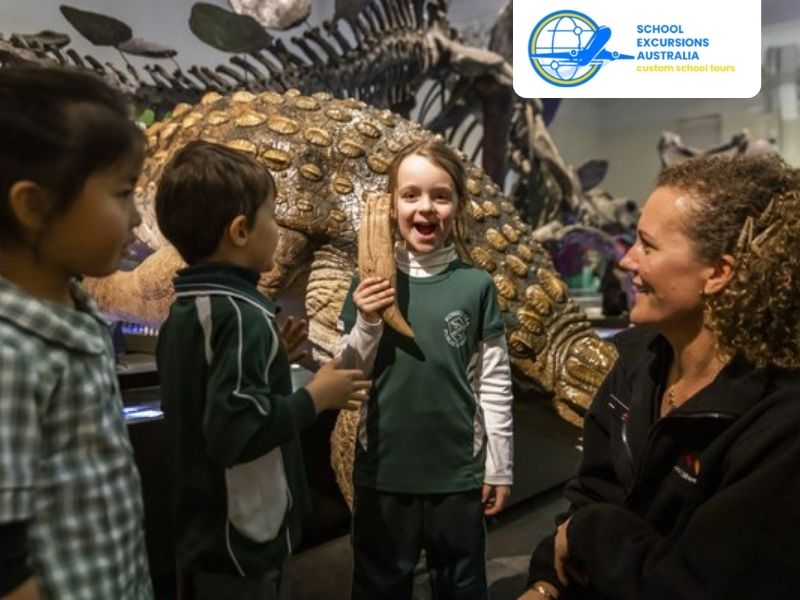
The most prominent benefit of curriculum-linked field experiences is that they tend to make students more engaged in the process in a natural way. When students come out of the classroom, it invigorates them and makes them more involved. The new environment also causes curiosity and learners ask questions, observe, and request explanation by educators and guides.
School-based educational trips in Australia tend to be incorporated in academic programs, and schools will tend to find better enthusiasm among students after the trip has been undertaken. The topics that appeared difficult or boring before are becoming pertinent and appealing.
This increased motivation is especially helpful in visual or kinaesthetic learners that perform optimally in an active environment. Visiting, touching and experiencing ideas of concepts provide them with other avenues of gaining the curriculum.
Enhances Critical and Problem-Solving Ability
Field based learning involves students being critical thinkers and interpreters of situations they have never encountered. They will have to rely on their judgment to come up with conclusions whether it be in the analysis of environmental changes, identifying plant species or the historical events that influenced a community.
This develops life skills that are vital like:
- Observation and critical thinking
- Logical reasoning
- Curiosity-driven inquiry
- Decision-making
- Flexibility in the new environments
These abilities are crucial not only to a successful academic performance, but also to adulthood and future professions. Employers are finding more importance in young people who are able to judge situations on their own and be creative, which is fostered during the enriching learning processes outside of the classroom.

Promotes Teamwork, Communication and Social Development
A classroom cannot necessarily recreate the lively forms of socialization that happen on an excursion. When student participation is made in curriculum-linked field experiences, there is collaboration, communication and even problem-solving as an entity.
These experiences are useful in developing:
- Self-assurance in communicating ideas
- Respectful communication
- Connection with peers
- Leadership skills
- Conscientiousness in social places
It is not just that students go back to school with a more enriched mind but a socially more enlightened and emotionally more self-confident mind. They are taught to be responsible, help others and value other perceptions- all essential parts of holistic education.
Support as a Right to Enhance Learning Outcomes
Organization of effective and safe learning tours needs skills, particularly in terms of whether they fulfill the curriculum requirements of various year levels. This is where skilled providers are important. Organisations such as School Excursion assist schools in developing goal orientated and well-structured experiences that meet the curriculum requirements and also ensure the safety of the experience and its smooth completion.
Their vast understanding of destinations, education systems, and logistical needs enable teachers to concentrate on the teaching results and not the administrative overheads. This makes school excursions Australia enriching, reliable, as well as outcome-driven.
Through extensive choice of location, organization of programs, and matching the experiences with the subject objectives, School Excursion makes every trip valuable to the meaningful learning and beneficial to the academic achievements of students.
The Reason Schools Must Trust to the Expertise of Professionals
Partnership with reputable educational travel companies comes with a number of benefits. The professionals are aware of how to manage risks, create systematic itineraries, and make the excursions educational and not just recreational. They also provide information on what kind of experiences are most appropriate to the objectives of a school, be it science, geography, history, arts or cross-curricular education.
Well planned trips are also inclusive, accessible, and safe in three key attributes of contemporary education. Using the services of a trusted provider such as School Excursion, schools can be sure to provide students with memorable experiences that not only enhance their minds, but their personality as well.
For further information, you may also refer to Outdoor Education Australia, Outward Bound Australia, the Australian Department of Education, the Outdoor Learning section of the Australian Curriculum, and Tourism Australia.
FAQs
Q1. What are curriculum-linked field experiences?
They are organized education trips aimed at facilitating and complementing particular curriculum goals through providing practical and real-world learning.
Q2. What are the benefits of learning through educational trips in Australia?
They engage students in fields that relate to their lesson topics, thus simplifying understanding of academic material, memorization of academic material, and practice of academic material.
Q3. Should excursions be appropriate in all subjects?
Yes. Real-life experiences can enrich science, history, geography, art, social studies and even lessons on English.
Q4. What is the reason to use educational travel companies in schools?
Professional providers make sure that the excursions are safe, properly planned, and in line with the curriculum objectives, which provide teachers with additional time to teach.
Q5. Do field experiences enhance student behaviour and confidence?
Absolutely. Being exposed to new surroundings develops independence, teamwork, communication and personal responsibility.
