The coastline of Australia is the core of the Australian environment, economy, and lifestyle. To the students, it is important to learn the operations of the coastline and how to remain secure in the ocean environments. Studies in educational programs on Port Macquarie coastal geography enable students to integrate classroom theory with the real-world coastal environment through observation and fieldwork as well as guided learning experiences.
As Australia is experiencing an increasing number of environmental challenges, including coastal erosion and the effects of climate change, coastal literacy has become the priority of schools. Some organisations such as School Excursions Australia assist schools in designing structured learning trips that include safety training to accompany environmental education.
Table of Contents
The Importance of Coastal Geography Education to the Students
Australia boasts one of the longest coastlines in the world. The study of the coastal processes will enable the students to appreciate the impact of the natural systems on human settlement and ecosystems. Learning Port Macquarie coastal geography presents students with practical examples of the coastal change and the marine environmental protection.
Key Learning Importance
- Knowing waves, currents and tides.
- Knowing how the erosion alters the coastline.
- Marine studies and biodiversity.
- Creating ocean safety consciousness.
Another benefit that is developed through coastal geography education is environmental responsibility whereby; students learn the implications of human activity on marine environments.
Natural Coastal Features That Students Can Explore
Port Macquarie provides a variety of coastal landscapes, which makes it the best place to be studied in the geography. The Port Macquarie coastal geography can enable students to study several coastal landforms within a single area.
Major Coastal Features
Beaches and Sand Systems
Students observe:
- Sand movement patterns
- Erosion and deposition on the beaches
- Seasonal coastline changes
River and Estuary Systems
The Hastings River estuary gives us the information on:
- Salty and freshwater mixing
- Sediment transport
- Coastal wetland ecosystems
Rocky Headlands and Cliffs
Those students who study the Port Macquarie coastal geography may review the ancient rock formation and learn the process through which geology influences a coastline through time.
The Role of Field Learning in Coastal Geography
Field experiences enable students to learn knowledge better in comparison to classroom-only learning. Students are involved in the coastal monitoring process in Port Macquarie coastal geography programs.
Field Learning Activities
- Determining the frequency and the direction of waves
- Determining vegetation areas along the coast
- Mapping shoreline changes
- Learning about dune stabilisation
A large number of schools arrange Port Macquarie school trips so that they can help achieve the outcomes of the geography and science curriculum by observing real-life examples.
Field learning is also beneficial in that the students are taught to work as a team and analyse.
Ocean Safety: An Element of Coastal Education
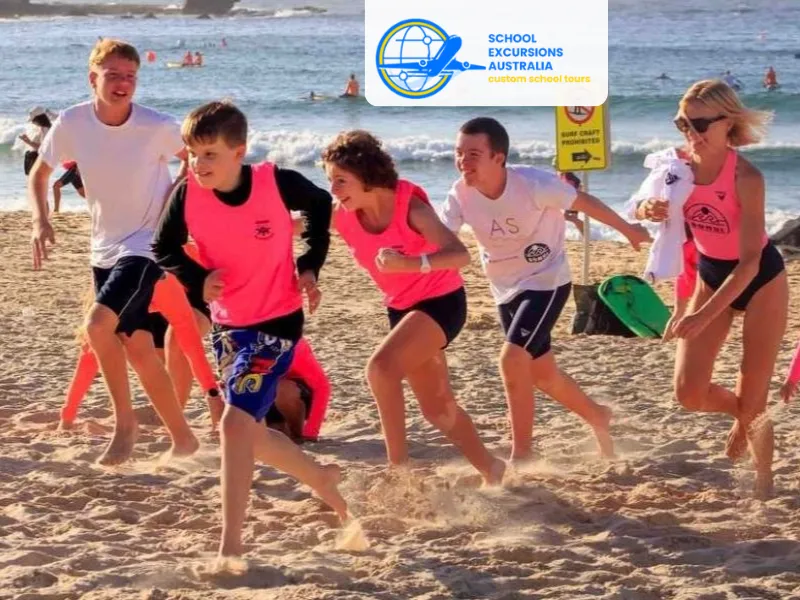
Ocean safety education provides students with the capacity to work safely with the marine environment. Students studying Port Macquarie coastal geography are also equipped with information regarding surf safety and hazards awareness.
Critical Ocean Safety Lessons
- Recognising rip currents
- Learning about the behaviour of surf zones
- Creating safe swimming zones
- Acquiring the fundamentals of emergency response
Students learn the theoretical and practical skills of safety through organised educational excursions Port Macquarie.
Why Organised Student Field Trips Have a Positive Relationship with Learning
Learning through travelling enhances student interaction and self-esteem. Involvement and interest in environmental courses are usually enhanced in schools that have arranged student group tours Port Macquarie.
In such tours, students who study Port Macquarie coastal geography get to experience:
- Real ecosystem observation
- Data collection practice
- Identification of the coastal hazards
- Education on environmental conservation
School Excursions Australia provides professional planning assistance to keep the field trips safe and on schedule meeting the curriculum and creating a smooth logistics.
Sustainable Environment and Coastal Protection
Modern coastal education has a large component of sustainability. The Port Macquarie coastal geography study could assist students in understanding the role of coastal ecosystems in sustaining marine life and the local communities.
Sustainability Knowledge Students Acquire
- Marine pollution impacts
- Coastal habitat protection
- The impacts of climate change on sea levels.
- Environmentally friendly tourism
To enhance environmental awareness sustainability modules are typically incorporated into schools’ educational excursions Port Macquarie.
Curriculum Connections Across Subjects
Coastal learning has a relationship with various academic subjects. The research on Port Macquarie coastal geography helps to learn:
Geography
- Coastal landforms
- Human coastal interactions
- Environmental management
Science
- Coastal landforms
- Human coastal interactions
- Environmental management
Environmental Studies
- Sustainability practices
- Conservation strategies
There are numerous Port Macquarie school trips that have been tailored to satisfy the curriculum requirements in these subjects.
Curriculum Connections Across Subjects
Coastal learning has a relationship with various academic subjects. The research on Port Macquarie coastal geography helps to learn:
Geography
- Coastal landforms
- Human coastal interactions
- Environmental management
Science
- Marine biology
- Water ecosystems
- Climate science
Environmental Studies
- Sustainability practices
- Conservation strategies
There are numerous Port Macquarie school trips that have been tailored to satisfy the curriculum requirements in these subjects.
Planning Coastal Learning Experiences
To organise education trips along the coast, it is important to be prepared in detail. To create safe and structured learning processes, schools usually collaborate with reliable organisations such as School Excursions Australia.
When organising student group tours Port Macquarie schools should consider:
Safety Preparation
- Risk assessment planning
- Emergency response systems
- Qualified supervision
Learning Preparation
- Pre-trip classroom lessons
- Field study worksheets
- Post-trip assessments
Proper planning enables maximum maximisation of Port Macquarie coastal geography field experiences by students.
Future of Coastal Education in Australia
The education in the coastal areas will also become more significant as the climate challenges grow. Future projects on the Port Macquarie coastal geography might involve:
- Coastal surveillance technology
- Drone mapping of shorelines
- Citizen science projects
- Climate impact research
Education providers such as School Excursions Australia keep on advancing new programs to facilitate the contemporary learning requirements.
Long-term Student Benefits
Those students studying Port Macquarie coastal geography are imparted with skills that go beyond academics.
Personal Development Advantages
- Critical thinking
- Environmental responsibility
- Risk awareness
- Team collaboration
These competencies enable the students to be responsible citizens in the environment.
Conclusion
Australian students need to be taught coastal geography and ocean safety. Learning Port Macquarie coastal geography aids the students to comprehend the coastal setting, sea life, and safety measures that are applicable in the daily living of Australians.
By organising substantial learning expeditions and masterfully planning trips to safe, exciting, and valuable experiences on the coast, schools can equip students with the environment to face the threats of the future.
FAQs
Q1. What is the importance of coastal geography to Australian students?
It makes the students appreciate the ocean systems, coastal hazards as well as environmental sustainability.
Q2. What do students get to learn in coastal field programs?
They get to know more about marine ecosystems, coastal features and ocean safety measures.
Q3. Are coastal education trips safe for students?
Yes, after making a proper plan, risk management, and training supervision.
Q4. In what ways do school field trips reinforce the school curriculum?
They offer practical learning that facilitates geography, science, and environmental education.
Q5. What is the most appropriate time to organise school trips to the coast?
Schools schedule their field learning activities in moderately weathered periods so that there is safety in the field.
