A good itinerary will quickly turn sour if there are no learning outcomes, if the accessibility of the excursion is not considered or if safety documents come late to be approved. The selection of the right school excursion provider cannot just be based on which destination is offered and at what price. Schools need assurance from the operator about the ability to support their curriculum, manage the task, and cooperate with the teachers.
The best operator will not always be the one providing the longest list of activities.
Why the Provider Matters as Much as the Destination
The destination creates the setting, but the program design determines whether the experience has educational value. Two groups may visit the same museum, national park or science centre and leave with very different outcomes.
A well-designed experience should connect the location to a specific purpose. Students might gather environmental data, examine primary sources, test a scientific principle or compare the use of public space. The activity should require active thinking rather than passive attendance.
Operational quality matters just as much. A suitable operator communicates clearly, supplies documents promptly and understands that the school retains responsibility for planning and approval. Victorian government guidance, for example, states that schools must check an external provider’s expertise, experience with young people and child-safety practices before selection.
Requirements differ between states, sectors and activities, so schools should always check the rules that apply in their own jurisdiction.
Six Tests for Evaluating a School Excursion Provider
A structured evaluation makes it easier to compare organisations on evidence rather than presentation. The following six tests cover the areas most likely to affect learning, safety and administration.
1. Test the Educational Fit
Begin with the intended learning rather than the available activities. Ask what students should know, practise or produce by the end of the experience.
A credible operator should be able to explain:
- Which curriculum areas the program supports
- How activities change for different year levels
- What students will do beyond listening or observing
- Whether pre-visit and follow-up materials are available
- How teachers can adapt the content for their classes
Be cautious when curriculum alignment appears only as a broad claim. A program described as “linked to science” is less useful than one showing how students will collect evidence, interpret results and apply a particular concept.
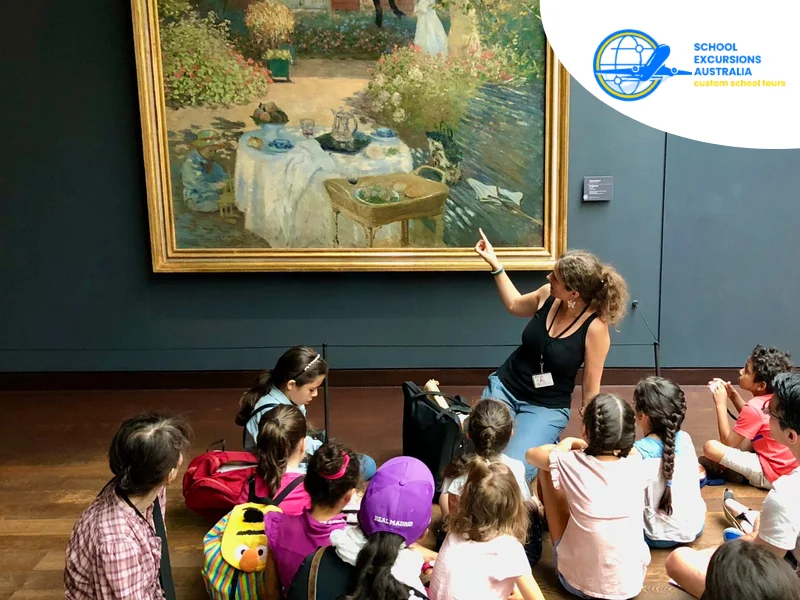
This distinction is especially important when comparing educational tours in Australia. A recognisable venue does not automatically guarantee a worthwhile program. Teachers still need to assess the depth, relevance and suitability of the learning experience.
2. Examine the Safety Evidence
Safety should be supported by current documents, not general reassurance. Request information early enough to review it properly and address any missing details before seeking approval.
Depending on the activity, useful evidence may include:
- Public liability insurance
- Activity-specific risk information
- Emergency and evacuation procedures
- Incident-reporting processes
- Staff qualifications or relevant licences
- Child-safety policies
- Severe-weather and cancellation procedures
The operator’s documents should help the school complete its own assessment. They do not replace it. Victorian guidance specifically notes that provider risk information may support a school’s risk register but must not take the place of the school’s own evaluation.
Check whether the documents relate to the exact program, location and season being considered. A general risk document may not address water activities, alpine conditions, remote travel, crowded public spaces or other relevant circumstances.
3. Clarify Staffing and Supervision
Teachers and external staff do not automatically have interchangeable roles. Before booking, establish who leads each activity, who supervises students between sessions and who responds when plans change.
Ask for a written outline covering:
- Staff-to-student arrangements during each activity
- The qualifications required for specialist sessions
- Responsibility during meals, transfers and free time
- Procedures when a student becomes unwell
- Arrangements for separating or regrouping students
- Communication between teachers and activity leaders
Schools must apply the supervision requirements of their own education authority. For example, Victorian government guidance sets minimum staffing expectations and requires ratios to be considered alongside risk-management planning.
Do not assume an instructor is available for general supervision simply because that person delivers an activity. Record each adult’s role so there are no gaps during transitions.
4. Assess Inclusion Before Confirming Numbers
Accessibility questions should be raised during program selection, not after deposits have been paid. Give the operator enough information to explain what adjustments are practical while protecting student privacy.
The discussion may need to cover:
- Step-free access and accessible bathrooms
- Sensory demands such as noise, crowds or lighting
- Rest areas and flexible participation options
- Dietary, allergy and medication arrangements
- Communication or language support
- Mobility requirements and accessible transport
- Additional preparation for unfamiliar environments
Look beyond whether a student can enter the venue. Meaningful inclusion requires access to the learning activity itself. For example, an accessible building may still contain a workshop layout, field route or timetable that creates barriers.
An experienced operator should discuss adjustments constructively and identify limitations honestly. Vague promises to “manage on the day” leave schools without enough information for consent, staffing or risk planning.

5. Check Whether the Itinerary Works in Practice
A program can appear manageable on paper while leaving no room for traffic, bathroom breaks, equipment distribution or movement between activities. Review the itinerary minute by minute, particularly for large groups and multi-site days.
Useful questions include:
- How long does arrival and group entry normally take?
- Where can buses load, unload and park?
- How far must students walk between locations?
- Is there sheltered space during poor weather?
- What happens when transport arrives late?
- Are meal and bathroom breaks realistically timed?
- Which activities depend on weather or minimum numbers?
This level of detail is essential for school trips across Australia, where distance, climate and transport availability vary considerably. Regional and remote programs may also require contingency time for limited services or changing road conditions.
6. Read the Price and Booking Terms Carefully
A low headline figure may exclude transport, accommodation, equipment, entry charges or teacher costs. Request an itemised quotation so the school can calculate a realistic per-student amount.
The quotation should identify:
- Inclusions and exclusions
- Minimum and maximum group sizes
- Complimentary or charged staff places
- Deposit and final-payment dates
- Cancellation and rescheduling conditions
- Refund treatment for absent students
- Charges caused by changing numbers
- Taxes, transaction fees or optional extras
Queensland’s official school-excursion procedure, for instance, addresses cost calculation, disclosure and refunds linked to the consent form. It illustrates why financial terms should be clear before information is sent to families.
Where the booking involves substantial deposits, overnight travel or several contractors, have the agreement reviewed through the school’s normal financial or legal process.
Compare Evidence Using a Simple Scorecard
A short scorecard can keep the decision focused. Rate each organisation against the same criteria and record the evidence supporting the rating.
Assessment area | Evidence to review |
Educational value | Learning outcomes, curriculum links and student tasks |
Safety readiness | Risk documents, insurance and emergency procedures |
Staff capability | Qualifications, experience and defined responsibilities |
Accessibility | Adjustments, facilities and participation options |
Operational detail | Timetable, transport plan and contingencies |
Financial clarity | Itemised price, payment dates and cancellation terms |
Avoid calculating a total score mechanically. A serious weakness in child safety, insurance or emergency planning cannot be cancelled out by strong educational resources or an attractive price.
Warning Signs That Require Further Questions
Not every concern means an organisation is unsuitable, but unresolved gaps should pause the decision.
Look more closely when:
- Documents are outdated, generic or difficult to obtain
- Curriculum claims cannot be connected to specific activities
- The quotation contains unclear compulsory extras
- Staffing responsibilities change depending on who answers
- Accessibility questions receive vague responses
- Emergency arrangements rely entirely on school staff
- Verbal promises are not reflected in the written agreement
A useful test is whether another staff member could review the file and understand exactly what has been agreed. Important conditions should not depend on emails scattered across several inboxes or an undocumented phone conversation.
Questions to Ask During the Final Review
Once the preferred option has been identified, arrange a final discussion rather than relying solely on promotional material. Use the conversation to confirm details specific to the student group.
Ask questions such as:
- What will students actively do, and what learning should result?
- Which documents will the school receive and when?
- Who is responsible at each stage of the day?
- What adjustments are available for identified student needs?
- What circumstances could change the itinerary or price?
- How are emergencies and parent communications handled?
- What preparation is required from teachers and students?
- Which booking conditions continue to apply after numbers change?
Record the answers and incorporate them into the approval, risk-management and family-information processes. This creates a clearer basis for planning than relying on memory.

Make the Decision on Evidence
The best excursion partner makes the educational purpose clearer and the planning process more dependable. Strong documentation, defined responsibilities and honest communication help schools identify concerns before students leave the grounds.
Before confirming the booking, compare the available evidence against curriculum goals, student needs, applicable policies and the full cost of participation. Schools can then review suitable school excursions across Australia with a much clearer picture of what a safe, inclusive and worthwhile program requires.
Frequently Asked Questions
A preliminary option may be identified first, but the school needs detailed program information before final approval. Provider documents should inform the assessment while the school completes its own required process.
Not by itself. Check the insured entity, policy dates, coverage amount and relevant activities. Any uncertainty should be referred through the school’s normal insurance or governance channels.
The division of duties should be documented before the trip. External instructors may control specialist activities, but teachers continue to have responsibilities under applicable school policies and excursion procedures.
References can be helpful, particularly when the groups and activities are comparable. They should supplement rather than replace checks of current insurance, safety procedures, qualifications and booking conditions.
Request them before deposits become difficult to recover and well before the school’s approval deadline. Complex, overnight or higher-risk programs usually require more review time than straightforward local visits.
