Cold weather does not have to bring outdoor learning to a stop. In alpine school camp Victoria environments, falling temperatures, snow cover, changing vegetation and shorter daylight hours give students conditions they can observe, measure and respond to directly.
The program, which is designed very well, has all the possibilities to unite Science, Geography, Physical Education and Personal Development together in one unit. The students will not only receive knowledge on how the mountains function, but also how to take care of their clothes, equipment, and teamwork. The winter season not only forms the background of the camp, but also forms the learning content.
Why is Winter Such a Special Classroom?
An Alpine environment requires its participants to be attentive. The changes in weather and surface conditions could affect the clothing of the group, the route taken and activities to be performed. These decisions make weather and risk management more immediate than they may feel in a classroom.
Students can investigate:
- How elevation affects temperature and precipitation
- Why snow remains longer on some slopes
- How plants survive cold, wind and seasonal snow
- How snowmelt contributes to catchments
- Why mountain weather changes quickly
- How tourism and recreation affect sensitive landscapes
- What responsible travel looks like in winter conditions
The Australian Alps Education Kit supports studies in climate, vegetation, fauna, geology, water catchments, tourism and conservation. It is designed to connect alpine environments with subjects including Geography, Biology, Outdoor and Environmental Science, History and Tourism.
What Can an Alpine School Camp Victoria Program Teach?
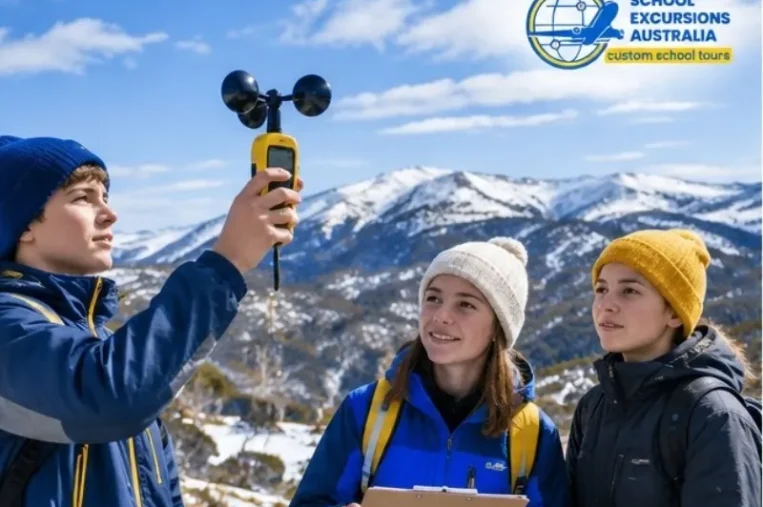
A strong program is one where there is a set of related questions. Including all possible activities associated with snow and other activities will simply create a crowded but not an educational camp.
One such question is:
How does the alpine environment affect living things, people’s decisions, and management of this environment?
This question allows different activities to contribute evidence. A weather reading, vegetation comparison, snow activity and resort observation can all support the same investigation.
How Can Students Read the Mountain Weather?
Mountain weather is not merely “cold.” Elevation, slope aspect, clouds, vegetation, and exposure may create differences even over relatively short distances. Students may take observations from two or three sites, observing:
- Air temperature
- Wind strength and direction
- Cloud cover
- Visibility
- Precipitation
- Snow depth or surface condition
- Exposure or shelter
- Time and elevation
The results can then be compared. Even if these two places are quite near to each other, a sheltered location among snow gums will have an entirely different feeling from that of an exposed hillside.
Another exercise for teachers to give to students is to compare their weather forecasts against the actual weather conditions on the ground. Here, the difference between predicting general areas and deciding on the specific spot can be brought about.
What Can Snow Teach Beyond Recreation?
Snow play, snowshoeing or cross-country skiing can support learning when students are encouraged to examine the environment around the activity.
Snow provides a basis for discussing:
- Changes between solid and liquid water
- Insulation and heat transfer
- Friction on different surfaces
- Water storage and snowmelt
- Visibility and navigation
- Seasonal tourism
- Equipment design
- Personal temperature regulation
For snow school excursions in Australia, snow should never be treated as guaranteed. Conditions vary between locations and throughout the season. A useful program should retain its educational value when snow cover is limited or an outdoor activity must be modified.
Other activities during the class include weather forecasting, topographical mapping, equipment review, or habitat comparison at lower elevations.
How do Alpine Plants Survive in Winter Conditions?
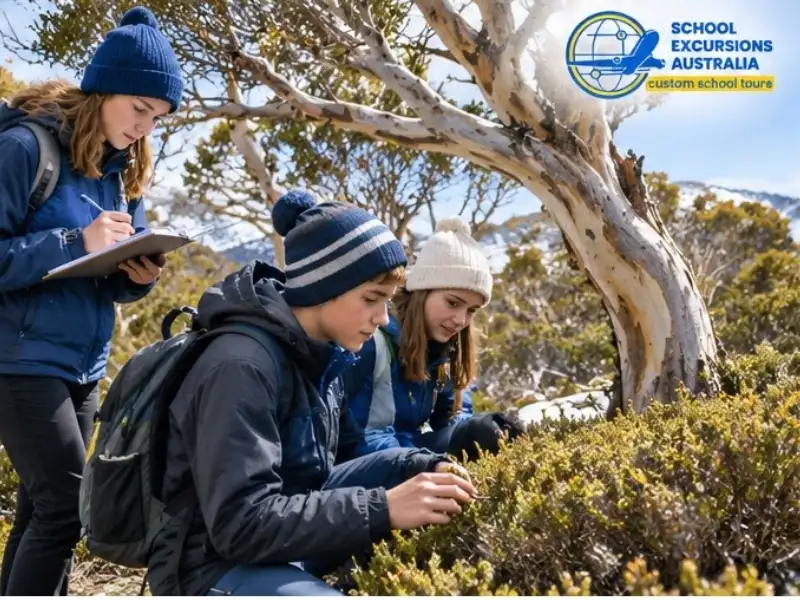
There are also changes in the vegetation of plants as a result of changes in temperature, winds, soil, and growth period. Students can observe taller forests at lower altitudes changing into alpine ash and snow gum woodlands, along with other low-level plant vegetation.
Alpine Resorts Victoria describes three broad vegetation zones:
- The montane zone, with taller and denser eucalypt forests
- The subalpine zone, where snow gums dominate lower woodland
- The alpine zone, where exposure and cold prevent tree growth
The students will be able to study how the low-lying plant life is used for protection against wind. In addition, they will study why the snow gums have flexible branches and how the plant life protects fragile soils from erosion.
Australia’s alpine regions are less than 0.1% of the total area of the country. There are numerous species that occur only in the alpine regions. The healthy vegetation cover ensures the stability of the soil.
How Can a Camp Connect Snow to Water Catchments?
Snow is not retained on the mountain. The snow, when melted, runs into the stream and adds to the rivers that feed the ecosystem and communities below the alpine region.
Some of the activities that the catchment activity may use to engage students include:
- Identification of the high areas, slopes and drainage lines from a map.
- Making predictions about where the melted snow will flow.
- Watching the water flow in the field where possible.
- Making connections between the alpine headwaters and the lower areas.
- Considering the effects of soil and vegetation on runoff.
The students are enabled to view the mountain as part of the wider water system and not just as a recreational area.
How Does Winter Build Practical Outdoor Capability?
Student learning is different when students make decisions that influence their comfort and involvement. Dealing with layers, keeping gear dry and recognizing early symptoms of cold stress demand focus and personal accountability.
A well-run camp can strengthen:
- Preparation and organisation
- Communication within a group
- Awareness of personal limits
- Problem-solving
- Leadership and cooperation
- Response to changing conditions
- Respect for safety instructions
The Victorian Outdoor Education Schools call this “learning by doing,” where learning is accomplished through practical experience, reflection, and application within the context of nature. The programs they have that correlate with the curriculum try to cultivate self-confidence, resilience, teamwork, leadership qualities, and environmental awareness.
Goals such as these should never be left to chance. A few moments spent reflecting at the end of the activity can encourage learners to determine which decision benefited the whole group, how things progressed during the activity, and how things will be done differently next time.
What Might a Purposeful Camp Day Look Like?
A balanced day needs time for activity, observation, meals, equipment changes and reflection. Filling every available minute can leave students tired and reduce the quality of learning.
Part of the day | Possible activity | Learning focus |
Morning briefing | Forecast and equipment check | Weather interpretation and preparation |
Field session | Snowshoe walk or habitat study | Adaptation, elevation and observation |
Midday discussion | Map and catchment activity | Water movement and landscape |
Afternoon challenge | Team navigation or snow activity | Communication and decision-making |
Evening reflection | Field notes and group discussion | Evidence, judgement and personal learning |
The exact schedule should remain flexible. Mountain conditions may require activities to change order, move location or stop earlier than planned.
How Can Tourism Become Part of the Lesson?
The services offered by the Alpine resorts, along with accommodation, roads and recreational facilities, make them good case studies for examining the link between tourism, employment and conservation.
Students can examine:
- Why resorts are located where they are
- How roads and buildings affect the landscape
- How visitors are directed away from fragile areas
- Why waste and water management matter
- How businesses respond to variable snow seasons
- How summer and winter tourism differ
- What climate trends could mean for alpine communities
Victoria’s climate research reports that snow depth and snow cover have declined in alpine regions since the late 1950s. However, the cool season precipitation has also declined more in the alpine regions compared to certain other parts of the state.
These trends can help facilitate age-appropriate talks regarding how environmental factors impact ecosystems.
How Should the Schools Choose an Alpine Area?
Various areas have their own strengths and weaknesses. It is best to start off with what you need from your students.
If schools want to choose between various alpine area school trips, they must look at:
- Travel time from the school
- Student age and outdoor experience
- Accommodation and meal arrangements
- Access to beginner-level activities
- Availability of qualified instructors
- Indoor learning spaces
- Medical and accessibility support
- Equipment hire
- Alternative activities
- Emergency communication
- Road and weather conditions
For instance, Mount Buffalo has snow gum forests, granite scenery, and winter playgrounds. Parks Victoria states that the two places suitable for such winter sports include Dingo Dell and Cresta Valley.
The place needs to be appropriate for the real group, not just the intended activity.
What Essential Things Must Be Clarified First before Any Decisions are Made?
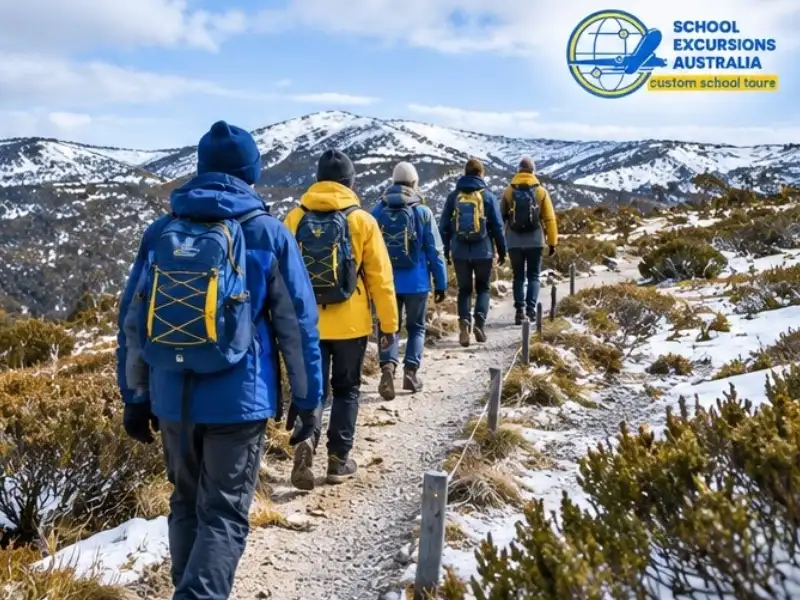
Before confirming any spending commitments, it is necessary for institutions to assess the requirements set by the local educational authority and relevant governing bodies. Even though specific documentation is available to assist with the process, it does not substitute for the school’s own procedures for risk and approval.
Confirm:
- Educational purpose and curriculum links
- Principal and governing-body approval
- Parent or carer consent
- Student medical and support information
- Provider qualifications and insurance
- Staffing and supervision requirements
- Transport and snow-chain arrangements
- First aid and emergency procedures
- Weather cancellation conditions
- Clothing and equipment requirements
- Refund and date-change terms
Depending on weather conditions in alpine areas of Victoria, the accessibility of roads may vary. The coach operator and school need to ensure the use of chains, vehicle compatibility, drop-off plans, and realistic travel time.
How Should the Students’ Clothing and Equipment be Handled?
The students should be provided with a comprehensive list in advance so that their parents have the opportunity to obtain what is missing either by borrowing or buying it.
A typical winter clothing and equipment list may include:
- Waterproof outer jacket and pants
- Warm base and insulating layers
- Beanie and waterproof gloves
- Enclosed waterproof footwear
- Spare socks
- Sun protection
- Water bottle
- Personal medication
- Small backpack
- Dry clothing for after activities
Cotton clothing can remain wet and increase heat loss, so providers may recommend suitable synthetic or wool layers. The final list should always reflect the planned activities and provider advice.
What Are Ways To Get Students Ready Prior To Traveling?
It would be wise for preparation to involve education as well as training. Students might require practice in putting on layers of clothing, carrying a day pack, and reading weather conditions or sports equipment.
Before departure, teachers can:
- Introduce the alpine environment and its vegetation zones
- Review the location on a topographic map
- Explain expected weather conditions
- Practise equipment checks
- Discuss early signs of cold stress
- Establish group communication procedures
- Explain low-impact environmental behaviour
- Set one field inquiry for the camp
This preparation allows the students sufficient knowledge to be able to make sense of the experience without having all the answers ahead of time.
Conclusion
Field notes, weather data, maps, and observations can be compiled into reports, presentations, and environmental management work. Students can analyze the vegetation belts, discuss the process of snowmelt, and analyze the resort’s efforts to balance tourism and environmental protection.
A good Alpine School Camp Victoria experience does not conclude once the group goes back home. Educators can start off by looking at the Alpine Regions destination details on the School Excursions Australia website, then select activities which suit their curriculum and students’ needs.
FAQs
No. Snowshoeing, weather monitoring, habitat studies, mapping and team challenges can provide strong learning without downhill skiing.
Often, yes. The itinerary should include activities that do not depend on deep snow. Confirm alternatives with the provider before booking.
A two- or three-day camp may provide enough time for travel, field learning and reflection. Longer programs can support greater independence but require more detailed planning.
Many guided programs are designed for beginners. Schools should confirm fitness expectations, equipment requirements and available modifications for their student group.
The provider and school should follow the agreed risk controls and cancellation thresholds. Indoor interpretation or lower-risk activities should be planned before departure.
