The experiences included in different school excursion ideas in April may vary greatly from those in January on the tours. A variety of factors such as weather, hours of daylight, behavior of fauna, and seasonal opportunities will influence the student’s impressions as well as the tour itself.
This is just one reason why the best tours do not only take into account the educational program but also the time of year. For example, fall months can ensure many possibilities for historical walks, active tourist behaviour in the mountains, and coastal investigations, while winter may suggest the idea of educational tours in museums or studying beautiful glaciers.
When thinking of climate diversity across Australia, educational institutions have to take into consideration the present conditions local to the particular area, rather than leaning only on seasonal peculiarities.
What Makes Early Winter and Autumn Suitable for School Excursions?
The weather in autumn is relatively cool compared to other seasons during daytime in southern Australia. This makes it easy to conduct activities such as guided walks, site visits, and ecological research. Early winter is ideal for conducting classes on issues such as changes of season and cold climate ecosystems.
These months can be particularly beneficial for educational institutions that would like to avoid excessive heat in the summer yet still have time to operate in open air before the arrival of cold winter.
Potential advantages include:
- More comfortable conditions for walking and observation
- Seasonal changes in vegetation and animal behaviour
- Opportunities to compare climate across Australian regions
- Lower heat exposure during outdoor activities
- Strong links to geography, science and sustainability
- Different tourism pressures compared with summer holidays
Conditions still vary from year to year. The Bureau of Meteorology describes autumn as the transition from summer to winter and notes that Australia’s regions experience seasons differently.
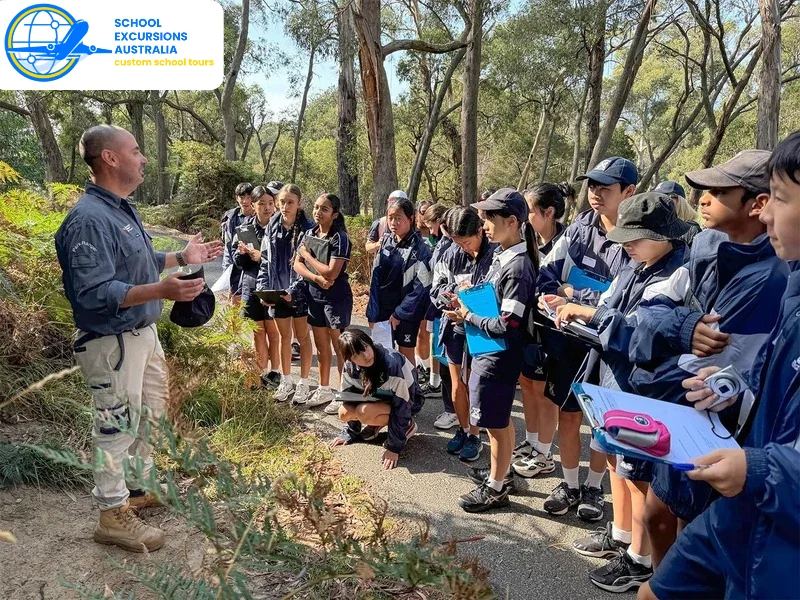
What School Field Trip Ideas Are Appropriate for This Season?
The best choice hinges upon what students need to explore. A site should not be chosen just on the basis of its popularity at some time of the year.
A good strategy is to pair the pedagogical aim with an area where the content is easily seen.
Learning focus | Suitable destination type | Seasonal advantage |
Landforms and fieldwork | Mountains and national parks | Cooler walking conditions |
Australian history | Goldfields and heritage precincts | Comfortable outdoor interpretation |
Wildlife conservation | Coastal reserves and wildlife centres | Seasonal animal activity |
Marine science | Western Australian reef environments | Reduced extreme heat and marine migration periods |
Culture and collections | Museums and cultural precincts | Reliable wet-weather option |
Alpine geography | High-country destinations | Changing weather and possible early snow |
Environmental management | Forests, wetlands and coastlines | Visible seasonal changes |
The seasonal advantage should support the lesson. It should never replace risk assessment, current weather checks or venue confirmation.
How can mountains help conduct autumn fieldwork?
The mountains provide plenty of data regarding terrain, vegetation, weather, erosion, and tourism. The climate in autumn is more favorable for sketching and working outside than during summer.
What can be discussed regarding the Blue Mountains?
Geography related to the Blue Mountains is connected with sandstone formations having an amphitheater shape and direction, as well as geo-management of the region. It is possible for students to conduct fieldwork, research slopes, and explore the effect of tourism on conservation.
The NSW National Parks offers a Stage 4 mountain landscape program in which students work with geographical instruments, learn about landforms and discuss issues like fire, landscape values and park management. The program is offered in Katoomba, Wentworth Falls and Blackheath.
Autumn and early winter planning should still account for:
- Rapid temperature changes
- Rain and low cloud
- Slippery stairs and walking surfaces
- Reduced daylight
- Exposed lookout areas
- Possible track or park closures
More often than not, the path should be short enough to have observation points rather than lengthy enough to provide insufficient time for analyzing those points.
What is the Explanation of the Possibility of Visiting the Grampians in Cooler Times?
The Grampians are the embodiment of the interaction between geology and biodiversity, and education about culture and nature. Hence, the students will be able to see sandstone formations, examine the flora of different heights, and study the tourists in an ecosystem.
While walking can be possible during cold seasons, it is wrong to assume that spring will always be warm. Parks Victoria warns people that strong winds, low temperatures and heavy rainfall can occur during the year. In addition, it gives the following advice to visitors: to take into consideration the fitness of the group; the skills and experience of its members; the route’s conditions and the duration of the day.
A Grampians program should prioritise:
- Routes suitable for the student group
- Clear cultural learning led by appropriate sources
- Layered clothing and waterproof protection
- Supervision around cliffs and uneven ground
- An alternative plan for unsuitable weather
Why Are Heritage Destinations Strong Autumn Options?
Historical destinations often combine indoor interpretation with outdoor streetscapes, demonstrations and guided activities. This balance helps schools maintain the program when conditions change.
Historical destinations often combine indoor interpretation with outdoor streetscapes, demonstrations and guided activities. This balance helps schools maintain the program when conditions change.
An example of this could be Ballarat. The goldfields project might combine immigration issues, techniques of mining, working conditions, laws of the government and the Eureka story. Other issues can include the geological aspect of gold extraction instead of treating the Gold Rush as only a historical event.
A useful inquiry might ask:
How did the availability of gold change Victoria’s population, economy and political life?
Students could collect evidence from:
- Reconstructed buildings
- Mining demonstrations
- Historical photographs
- Maps and government records
- Underground experiences
- Costumed interpretation
- Primary-source extracts
Teachers need to limit themselves to two or three related activities in the one-day field trip as opposed to trying to do everything.
A useful inquiry might ask:
What about wildlife viewing areas in cold months?
Wildlife viewing is most effective when the program concentrates on habitat, behavior, and conservation.
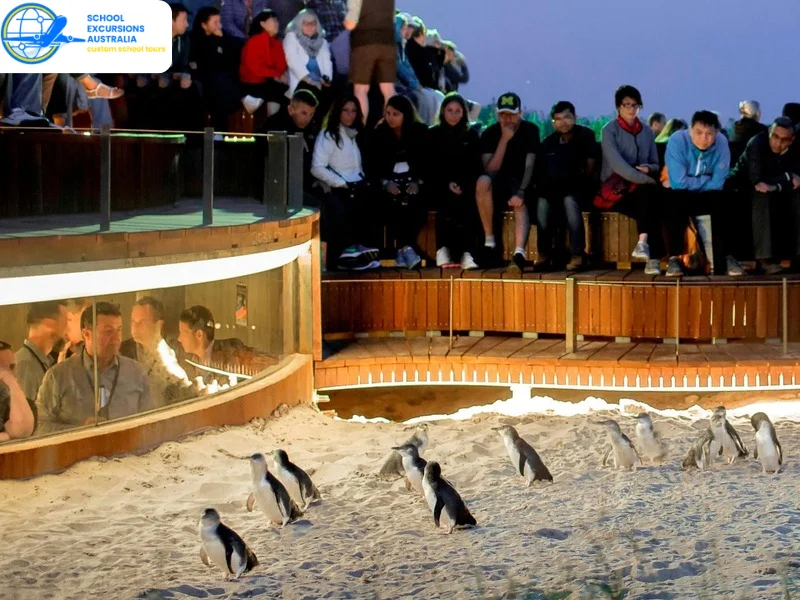
How Can Phillip Island Support Conservation Learning?
Lessons can be drawn about little penguins, habitat, food chains and the connection between tourism and conservation from Phillip Island. The cooler seasons will also allow students to explore animal insulation, feeding of animals in the sea and light changes.
An effective program can ask students to examine:
- Why penguins come ashore at particular locations
- How artificial light affects wildlife
- Why boardwalks and viewing areas are used
- How researchers monitor penguin populations
- What visitors must do to reduce disturbance
Students must dress appropriately for winds and evening shores. Schools must also think about after-dusk arrival times during field trips where there is wildlife activity.
Why is Port Macquarie a Good Choice for Autumn?
Port Macquarie links the coastal rainforests, koala habitats, and coastal regions. The students will learn about the interdependence of the animals with vegetation, the food trees and the paths of movement.
For boardwalks and habitat mapping, autumn will be a good season, but it is important for schools to watch out for the rains in the region.
Autumn can be appropriate for boardwalk observations and habitat mapping only if schools monitor rainfall and local conditions. The strongest program links each location through one question, such as:
How do connected habitats support wildlife across a developed coastal area?
This avoids treating the rainforest, koala habitat and shoreline as unrelated stops.
Can Marine Science Work During Autumn and Early Winter?
Yes, but the most suitable region may not follow southern Australia’s seasonal pattern. Ningaloo Coast of Western Australia is on the cusp of receiving many visitors from Easter onwards, as marine activity is prevalent during autumn and winter.
Why Choose Exmouth and Ningaloo Reef?
There are several educational values to be derived from a Ningaloo Reef field trip. WA Parks identifies several seasonal events around this period:
- Coral spawning generally occurs in March or April
- Whale sharks are commonly present from April to July
- Manta ray numbers increase from May
- Humpback whale activity begins in June
Seasonal wildlife activity should provide context rather than a promise. A useful program remains educational even when students do not see a particular animal.
Water-based plans should include alternatives such as:
- Glass-bottom boat interpretation
- Shoreline habitat mapping
- Visitor-centre programs
- Coral and fish identification
- Marine debris surveys
- Underwater video analysis
Travel time and cost make Exmouth more suitable for a multi-day program than a short visit. Schools should also book early because Easter to October is the region’s peak visitor period.
How Can Museums Strengthen a Seasonal Itinerary?
Museums and cultural institutions provide reliable options when rain or cold weather limits outdoor work. They are particularly useful when combined with a nearby field site.
For example, students might complete:
- A museum session on biodiversity followed by habitat observation
- A migration exhibition followed by a heritage precinct walk
- A science workshop followed by environmental fieldwork
- An art collection study followed by an architecture investigation
There are many institutions that are found near major cities such as Melbourne, Sydney, Canberra, Adelaide, and others. It is essential that an appropriately planned city tour leaves sufficient time to move from one place to another using coaches.
Objectives in museums should be kept simple. Asking the students to focus on analysing three items is always more fruitful than asking them to gather data on all galleries.
When Do Alpine Locations Become Appropriate?
Early winter can help to include altitude, snow formation, tourism and adaptation to a cold environment. However, schools should not plan the entire trip under the assumption of snow at a specific time.
An alpine visit can remain useful without snow when students study:
- Changes in vegetation with elevation
- Temperature and wind exposure
- Water catchments
- Resort infrastructure
- Seasonal tourism
- Landscape management
- Weather forecasting
A weather-related activity must always have an alternative. Interpretation indoors, map making, field sketching from a safe place, or lower-altitude ecology study will allow the learning objective to be achieved.
Road conditions, cold-weather gear, qualifications of the providers, and other requirements related to the activity must be ensured by the schools before departure.
What is the Process of Selecting an Appropriate Location for a Seasonal Field Trip?
When comparing different locations in Australia for school activities or field trips, teachers must ensure first and foremost that they fulfill the curriculum requirements. The season is secondary to the learning objective.
The steps of selecting a destination are simple:
- Identify the Learning Objective and the Outcome
This means stating clearly what students should learn and what they should be able to do after the visit.
- Select the Environments
Choose two or three destinations that will provide students with appropriate evidence.
- Assess Seasonal Features
This includes reviewing the average weather conditions, amount of light, activity of wildlife, and possible dangers.
- Verify Current Situation
Request background information pertaining to the current state of the institution (availability, closure, capacity per group, and weather conditions).
- Calculating Total Cost
Carry out calculations in respect of transport, admission fee, boarding, equipment, food, and salary cost.
- Consider the Requirements of the Participation
Get ready for medical considerations, facilities, attire, swimming, and other activities for students.
What Should Schools Check Before Booking?
Seasonal suitability should be confirmed directly with venues and providers. Information from a previous year may no longer reflect operating days, activity availability or access conditions.
Ask each provider:
- Which programs operate during the proposed month?
- Are any activities dependent on weather or wildlife?
- What happens when the main activity cannot proceed?
- Is shelter available for meals and briefings?
- Which clothing and equipment are required?
- Are tracks or facilities accessible to all students?
- What are the deposit and cancellation conditions?
- How early must final numbers be confirmed?
- Does the provider supply risk and insurance documents?
- Are curriculum resources available before the visit?
These answers allow schools to compare the actual program rather than general destination descriptions.
How Should the Weather Impact the Final Plan?
The climate will allow schools to choose a proper season for their trip, but weather is responsible for deciding which activities can take place on a particular day.
According to the Bureau of Meteorology, “weather refers to short-term conditions such as temperature, rainfall, wind and humidity, whereas climate refers to patterns of these variables.”
In the week before departure, schools should review:
- Official forecasts and warnings
- Fire danger and park alerts
- Road and track conditions
- Tide or marine forecasts
- Daylight and return times
- Heat, cold and wind exposure
- Provider updates
- Alternative activities
Clothing lists should reflect the location rather than the season’s name. Autumn in Exmouth, Katoomba and Melbourne can require very different preparation.
Conclusion
The most effective school excursion ideas satisfy curriculum requirements and the realities that students can observe during the season they choose. Thus, autumn can allow for heritage excursions, mountain work and coastal field studies, while early winter can allow for studies of alpine geography, museum programs and seasonal marine learning.
Schools can research the possible options by using the School Excursions Australia destination guide. Schools can come up with a small list of two or three of the most suitable choices and learn about current programs and seasonal requirements of each choice.
FAQs
No. Cooler average conditions do not remove risks from heat, fire, storms, wind or flooding. Schools must review current warnings and local conditions.
No. Snowfall and access can vary. The program should retain its educational value without snow and include an alternative activity.
No. Seasonal patterns may increase the possibility of sightings, but wildlife behaviour cannot be controlled. Habitat and conservation learning should remain central.
They can offer reliable indoor options, but transport delays, wet-weather movement and crowded venues still require planning.
High-demand wildlife, alpine and multi-day programs may require booking two terms or more in advance. Confirm availability before seeking final approval or collecting payments.
