The value of museum field trips arises not only from strolling around the halls and reading the descriptions of artworks. Educational tours Melbourne schools may provide the basis for students to interpret artworks, analyze the historical objects, and learn about the representation of culture through the collection.
Melbourne museums contribute to the educational process in such subjects as visual arts, history, media, design, English, and humanities. The importance of the educational aspect is dependent on how well the tour is connected to the curriculum.
What Makes a Museum Visit Educationally Valuable?
Field trips that are worth the time should give one a purpose to observe, ask questions, and communicate. They should understand the subject matter as well as the relevance of the task to their classroom lessons.
Strong museum visits usually include:
- A defined curriculum connection
- Age-appropriate exhibits and activities
- Opportunities for close observation
- Questions that require evidence-based answers
- Time for discussion and reflection
- An activity students complete after returning to school
The number of exhibits visited matters less than the quality of students’ engagement. Spending ten focused minutes examining one artwork may produce more learning than moving quickly through an entire gallery.
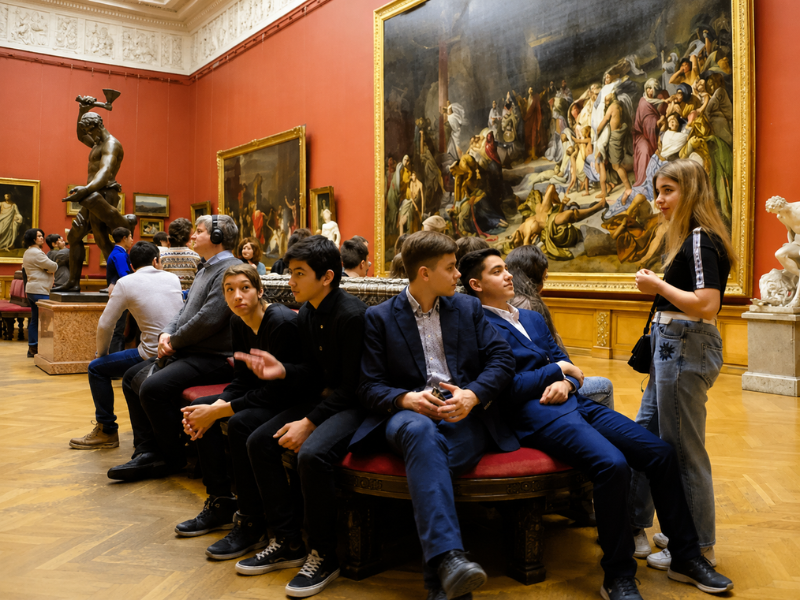
Educational Tours Melbourne Students Can Learn From
Melbourne has several cultural institutions offering structured and self-guided experiences for schools. Each venue supports different learning areas, so teachers should compare programs before confirming a visit.
National Gallery of Victoria
The National Gallery of Victoria supports learning through historical and contemporary art, design and special exhibitions. Its education programs use close looking, guided inquiry and creative activities to strengthen visual literacy.
Students may explore:
- How artists communicate ideas
- How materials and techniques affect meaning
- The relationship between art and cultural identity
- How historical events influence creative work
- The role of design in society
- First Nations art and cultural expression
- Art from different countries and periods
The NGV offers educator-led programs, self-guided visits and learning resources for different year levels and curriculum areas. Teachers can review current options through the NGV Teachers and Students portal.
ACMI
ACMI explores the world of screen culture including films, TV, videogames, and other moving images. It is especially relevant to courses dealing with media, narrative, design, technology and visual communication.
A visit may help students examine:
- How moving images create meaning
- The development of film and television
- Storytelling through sound, colour and editing
- The relationship between technology and creativity
- Australian screen history
- First Nations contributions to screen culture
- How audiences interact with digital media
ACMI’s exhibitions and school programs can support learning before, during and after the visit. School groups generally require booking, so teachers should check current requirements through ACMI Education.
Immigration Museum
The Immigration Museum allows students to investigate migration, identity, belonging and Australian history through objects, documents and personal stories.
Depending on the selected program, students may examine:
- Reasons people migrate
- The effects of government policies
- Experiences of arrival and settlement
- Changes in Australian society
- Cultural identity and belonging
- The relationship between First Peoples and migration histories
- How museums present personal and national stories
Its curriculum-aligned programs include facilitated workshops and gallery activities for primary and secondary students. The museum’s school excursion information can help teachers identify appropriate programs.
Melbourne Museum and Bunjilaka
Learning is encouraged in Melbourne Museum regarding history, culture, science, and the environment. At the Bunjilaka Aboriginal Cultural Centre, learning experiences related to the history, culture, and knowledge of First Nations are possible.
Teachers should be cautious when dealing with First Nations material and use the language and learning materials of the institution. Students need to know that Aboriginal cultures are dynamic and contemporary cultures.
Matching the Museum With the Learning Objective
Not every cultural venue will suit every class. The first planning decision should be the learning outcome, not the destination.
A teacher could ask:
- Do students need to analyse visual techniques?
- Are they examining migration and identity?
- Is the unit focused on film or digital storytelling?
- Do they need examples of historical primary sources?
- Will they create an artwork or media response afterwards?
- Does the program support the correct year level?
For visual arts, the NGV may provide the strongest collection-based experience. ACMI may be more relevant for media and digital storytelling, while the Immigration Museum can support history, civics and identity-based learning.
Clear alignment prevents school excursions Melbourne students attend from becoming disconnected days out.
Preparing Students Before the Visit
Preparation gives students enough background to participate without having to explain everything in advance. They should arrive ready to observe and ask informed questions.
Introduce the Main Inquiry Question
Pose one primary research question for students to consider, for instance:
- How do artists express culture through their work?
- Whose voices does this anthology capture?
- How does the museum employ objects in its narrative of history?
- How has technology impacted storytelling?
- Which factors determine the presentation of an exhibit?
An investigative research question helps students have a purpose for collecting supporting information.
Review Essential Vocabulary
Students may need terms related to:
- Colour, line, texture and composition
- Artefacts and primary sources
- Curatorship and interpretation
- Migration and cultural identity
- Film, sound and editing
- Representation and perspective
The vocabulary should match the students’ age and the selected exhibition.
Explain Museum Behaviour
Students should know how to move through galleries responsibly. Expectations may include:
- Staying with the assigned group
- Using quiet voices
- Not touching objects unless invited
- Following photography restrictions
- Keeping food and drinks outside galleries
- Respecting other visitors
- Listening to museum educators
These instructions protect collections while allowing students to focus on the experience.
Activities That Encourage Active Learning
Worksheets can support learning, but they should not require students to copy large amounts of label text. Better activities encourage observation, interpretation, and comparison.
Close-Looking Activity
Ask students to spend several minutes examining one artwork or object before reading its label.
They can record:
- Three details they notice
- One question raised by the object
- The materials used
- The possible purpose or message
- Evidence supporting their interpretation
Students can then compare their first response with the information provided by the museum.
Compare Two Objects
Students can compare artworks or artefacts from different periods, artists or cultural contexts.
They might examine:
- Materials and techniques
- Intended audiences
- Cultural influences
- Similarities and differences
- Whose perspective is represented
- How meaning changes over time
This activity develops observation and evidence-based reasoning.
Curator Challenge
Ask small groups to select three objects for a miniature exhibition. They must create a theme, arrange the objects, and explain why each item belongs.
The task shows students that museum displays involve choices. What is included, excluded, or placed together can influence how visitors understand a subject.
Visual or Written Response
Students can sketch, write or record a short reflection on one exhibit. The response should explain what they noticed and why it matters rather than simply stating whether they liked it.
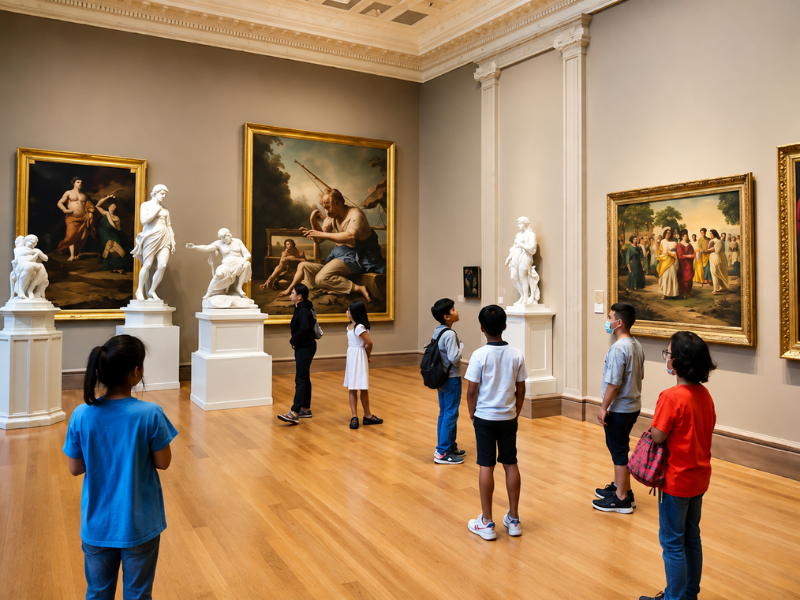
Planning Melbourne School Trips
Good logistics protect learning time. Delays, unclear meeting points and unsuitable group sizes can reduce the value of even a strong program.
Before booking, teachers should confirm:
- Program suitability for the year level
- Group capacity and supervision requirements
- Arrival and departure procedures
- Accessibility and sensory considerations
- Photography and device rules
- Bag, food and lunch arrangements
- Transport and walking distances
- Emergency procedures
- Available pre-visit resources
- Cancellation or schedule-change requirements
Teachers should also confirm whether the visit is educator-led or self-guided. A self-guided program requires more preparation because school staff will be responsible for leading discussion and managing timing.
Making the Visit Accessible
Students may experience galleries differently. Some may need physical access support, simplified instructions, additional processing time, or a quieter route.
Schools should contact the venue before the visit to discuss:
- Wheelchair access
- Accessible toilets and entrances
- Sensory requirements
- Hearing or vision support
- Assistance animals
- Language and communication needs
- Rest areas
- Group movement between spaces
A flexible schedule can help students participate without feeling rushed.
Extending Learning After the Excursion
The museum visit should produce material students can use afterwards. Follow-up work turns observations into assessable learning.
Students could:
- Write an exhibition review
- Create an artwork inspired by a technique they observed
- Design a small classroom exhibition
- Analyse how one object communicates cultural meaning
- Compare two artists or historical perspectives
- Develop a digital story or short video
- Present a response to the inquiry question
- Recommend an object for inclusion in a museum collection
A reflection completed soon after the visit can capture details while the experience remains fresh.
Connecting Museums With Outdoor Cultural Learning
Art and culture learning does not need to remain inside a gallery. Selected Melbourne outdoor learning activities can help students examine public art, architecture, memorials and cultural precincts.
Students might:
- Analyse public sculptures
- Record architectural features
- Map artworks within a precinct
- Compare formal galleries with public displays
- Examine how cultural spaces shape community identity
These activities can extend excursions for schools Melbourne educators plan by connecting museum collections with the city’s broader cultural landscape.
Turning a Museum Visit Into Meaningful Learning
The best possible education tours in Melbourne are those which are based on clear questions, observing and following up on what has been observed. Students will be able to come away with something tangible that is capable of being analyzed and used, rather than merely having visited some exhibits.
When considering taking students to see art and cultural sites as part of an excursion from school, one must begin by determining the learning outcome, making comparisons between suitable places and an activity that demands observation.
FAQs
An educator-led program is useful when specialist interpretation is required. A self-guided visit works well when teachers have prepared their own questions, timing and activities.
A focused study of three to five relevant objects is usually more valuable than moving quickly through an entire collection.
Only when the questions require observation or interpretation. Long worksheets can distract students from the exhibits and create unnecessary copying.
Yes. A single exhibit may connect visual arts with history, English, media, design or civics when the activities are planned around shared curriculum outcomes.
Confirm group capacity, accessibility, supervision, arrival procedures, photography rules, storage arrangements and whether pre-visit resources are available.
