A lesson in caves may be used to discuss limestone, while lessons in the forest may be used to teach about biodiversity, and a lesson on the coast will show examples of erosion. All three topics can be combined within one area at Margaret River.
This guide to school trips in the Margaret River area provides teachers with information on how caves, forests, coastlines and cultural education can be used to enrich the learning process in the area of science, geography and outdoors education. Teachers should prepare appropriate inquiry questions and methods of learning in order for the trip to be successful and meaningful and not just a run of touristic locations.
Why Margaret River Supports Connected Learning
The Margaret River location consists of beaches, rivers, cliffs, caves, agricultural areas and areas affected by tourism. The variety of the setting allows teachers to integrate various subjects and create a holistic programme.
The Leeuwin-Naturaliste Park stretches about 120 km from Cape Naturaliste to Cape Leeuwin. This park has rocky ocean, beaches, forest and bushland as well as numerous historical and archaeological places. The Wardandi people are acknowledged as traditional owners of the park.
Students can consider issues like:
- How does water create and change limestone caves?
- Why do plant communities vary across the region?
- How are coastal landforms shaped?
- What evidence reveals environmental change?
- How do cultural knowledge and scientific inquiry describe place?
- Mention some ways of handling access for visitors in difficult situations.
It is important to note that the proper correlation of multiple sites into a cohesive narrative brings sense to learning in a much better way than seeing each of them singularly.
What the Margaret River School Excursions Guide Covers
There is both academic value and broader personal growth in the area. The activities can be modified for primary children to recognize environmental characteristics and secondary children to collect environmental field data.

Cave Science and Geological Time
The limestone caves in Margaret River allow students to understand geological processes that take place very slowly. These caves will demonstrate how rainwater interacts with limestone and forms passageways below the surface.
Students may examine:
- Stalactites, stalagmites and other formations
- The role of groundwater
- Limestone dissolution and deposition
- Cave chambers and underground waterways
- Fossils and evidence of past environments
- The effects of people entering fragile cave systems
Various caves may provide for various areas of study. Lake Cave possesses a lake in its cave system, whereas Mammoth Cave is linked with fossils. Jewel Cave provides the opportunity for students to learn about the size and formation of a significant show cave along with the karri forest surrounding it.
Department of Biodiversity, Conservation and Attractions provides various programs for studying caves and abseiling to promote Science, Social Science, and Outdoor Education in karst and forest environments.
Cave study can also introduce students to scientific uncertainties. There are various pieces of evidence in water, climate, and environmental formations that need to be interpreted properly. Thus, this allows students to understand that geology is an inquiry into evidence rather than facts.
Forest Ecosystems and Biodiversity
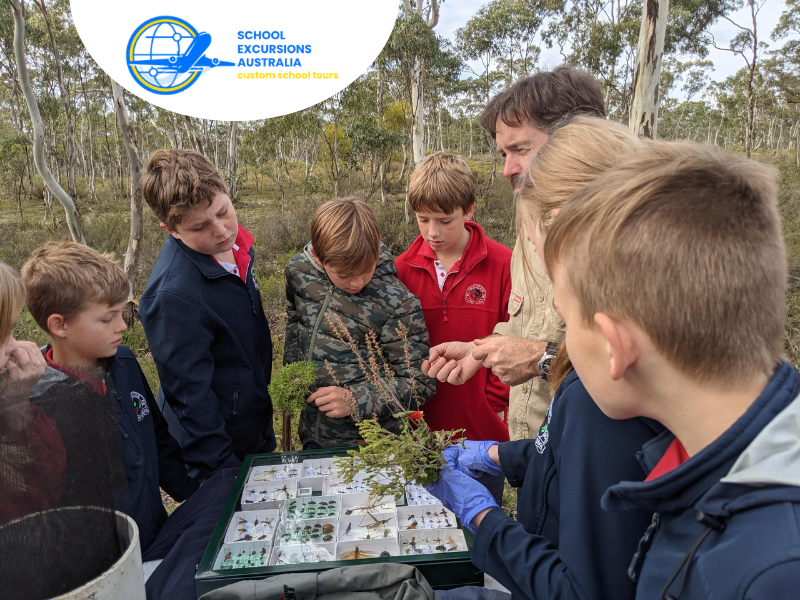
Above the caves, forests create another layer of learning. Students can examine how vegetation, soil, water, climate and wildlife interact within an ecosystem.
Field activities may involve:
- Comparing canopy and understorey plants
- Looking for signs of animal activity
- Recording environmental conditions
- Examining leaf and bark characteristics
- Identifying natural and human disturbances
- Comparing managed and less-disturbed areas
There is no need for students to collect specimens and upset any animals in the process. Photographs, illustrations, sound mapping, and field notes will suffice as data-gathering sources for future analysis.
The forest setting also provides grounds for studying the habitat needs of certain species. It can be examined why certain animals require tree hollows, undergrowth, leaf litter and interconnected vegetation. Older classes will look into the impact of fire, alien species, tourists and climate change on these needs.
The learning program at Margaret River can make use of a basic comparative task that involves comparing two settings, forest and coastal. Seeing the differences in wind, soil, plant life and exposure allows the community to connect nature with animals living in that area.
Currents and Environmental Changes
The coast teaches students about the large process of erosion, weathering, deposition and energy of waves. Cliffs, rocky platforms, beaches and sand dunes give physical evidence of the different natural forces affecting the landscape.
Students can observe:
- Differences between sheltered and exposed coastlines
- Signs of erosion on cliffs and pathways
- Sand movement and dune vegetation
- The effect of wind and salt on plant growth
- Human infrastructure near natural features
- Measures used to protect sensitive areas
The process of finding out what evidence to look for in the case of a coastline study will be more useful for students. As an alternative to describing only one beach, students may choose to compare two coastal areas or assess how visitor management can minimize the damage caused.
Another issue that must be considered in case of a coast study is safety. The reason for that is the existence of dangerous elements like the edge of the cliff, changes in the weather, wave actions, and the uneven ground.
Wadandi Culture and Links to Country
Margaret River belongs to Wadandi Country. The use of cultural education could assist in understanding that the landscape not only has physical elements but also carries culture, history, and obligations.
Appropriate programs may explore:
- Wadandi relationships with Boodja, meaning Country
- Seasonal knowledge and resource use
- The cultural importance of plants, animals and waterways
- Ways knowledge is passed between generations
- Continuing care for Country
- Respectful behaviour at cultural places
These experiences are either guided by Wadandi custodians or created using the correct process of community consultation. The teacher needs to verify that the cultural content is being delivered by its rightful creator.
Preparation is also necessary for students. They should know that some stories, places and practices may not be available for recording or photography. Listening respectfully and following the educator’s guidance are part of the learning experience.
Outdoor Skills and Personal Development
Not all of the achievements must stem from a worksheet. Bushwalking, spelunking, navigating, and teamwork exercises may assist students in honing their skills of communication, decision-making, and personal accountability.
Useful outdoor learning outcomes may include:
- Moving safely through unfamiliar terrain
- Reading maps and following route markers
- Managing personal equipment
- Communicating within a group
- Responding calmly to challenges
- Assisting peers with special needs
- Adhering to environmental and safety protocols
The justification of the adventure has to be made from an educational point of view. The goal of the activity is not to provide enjoyment to students. Teachers must again illustrate how the activity is performed in relation to sports and other significant skills.

Adapting Activities to Student Age and Curriculum
Educational tours in Margaret River can be modified to suit different age groups, subjects and levels of student capability.
Student group | Learning focus | Suitable activity |
Early primary | Natural features and living things | Guided forest walk with drawings and observations |
Upper primary | Environments and adaptation | Compare cave, forest and coastal habitats |
Junior secondary | Landscapes and geological processes | Cave study with annotated diagrams |
Middle secondary | Ecosystems and environmental change | Coastal or forest field-data collection |
Senior secondary | Management and sustainability | Evaluate tourism and conservation strategies |
Teachers should limit the number of major learning goals. One clear inquiry explored across two connected locations will often produce better work than a full itinerary of short visits.
Planning School Trips in Margaret River WA
One must note the area’s size, as location and order will have an impact on gauging the program’s success. The planning stage involves starting with desired outcomes, then moving to logistics.
Organize the Day Around the Inquiry
An inquiry will intertwine students’ activities so that they can answer the following essential questions:
- How does water affect the environment above the surface and in its underground world?
- How do environmental conditions affect species living in certain habitats?
- How does balance between accessibility for visitors and environmental preservation work?
- How do changes in this environment manifest themselves?
The question should be handed out before the trip so that the students can form their hypotheses, make preparations for the field trip, and understand how the venues fit in the overall plan.
Consider Physical Dilemmas
There are caves, forest trails, coastal regions, etc., that may contain stairs, steep slopes, narrow passages, slippery ground, irregular surfaces, etc. Therefore, teachers have to check not only the venue’s physical needs, but also those of all the activities involved.
Ask about:
- Walking distance and estimated duration
- Number of stairs
- Lighting inside caves
- Accessible routes and facilities
- Rest points and toilets
- Minimum footwear requirements
- Alternative activities
- Procedures for students unable to complete a route
Planning for accessibility needs to be done prior to the booking process becoming difficult to reverse or change. A suitable alternative must provide similar learning outcomes.
Consideration of Safety and Weather Conditions
Responsibilities for risk management and approval for schools remain with schools themselves. Provider documents can support planning, but teachers still need to assess the students, activities, transport and conditions involved.
Preparations may cover:
- Staff supervision and group arrangements
- Emergency contacts and communication
- Student medical information
- Clothing and footwear
- Heat, rain or strong wind
- Cave and coastal safety rules
- Changes caused by site closures
The official Leeuwin-Naturaliste National Park information advises visitors to consider the specific risks associated with bushwalking, swimming, caving and other outdoor activities. Teachers should also review current alerts before departure.
Learning Before and Post-Visit
With adequate preparation, you will ensure that your students have the necessary vocabulary and knowledge to enable them to make insightful observations. This may involve learning about maps of the region or cave terms.
After returning, students can:
- Compare evidence collected at different sites
- Explain how a cave formation develops
- Create a forest or coastal food web
- Evaluate a visitor-management strategy
- Develop a fieldwork report
- Reflect on cultural and environmental responsibilities
These activities convert a memorable experience into assessable learning.
Assign a Purpose to Each Location
Margaret River has the ability to combine the study of caves, forests, coastlines, culture, and outdoor education into a single package. The value of Margaret River as an educational place doesn’t lie in the creation of the largest quantity of attractions possible. Its value lies in choosing appropriate locations for studying a significant question.
The Margaret River school excursions guide can be used by teachers in determining proper learning goals and comparing different locations in order to devise realistic fieldwork activities. Now you need to move on to reviewing the Margaret River destination page.
Frequently Asked Questions
Yes, but travel time, activity duration and student needs must be considered. The schedule should leave enough time for instruction and observation rather than moving quickly between sites.
Not every cave route suits every student. Stairs, enclosed spaces, lighting and mobility requirements vary, so schools should review access details and available alternatives before confirming the activity.
Enclosed shoes, weather-appropriate clothing, sun protection and a waterproof layer are sensible for many activities. The final list should be based on the exact locations, season and provider requirements.
Yes. Suitable tasks include habitat comparisons, coastal observations, field sketches, environmental measurements and evaluations of visitor-management strategies.
Use experiences led by Wadandi custodians or programs developed with proper community involvement. Students should receive clear guidance about respectful behaviour, photography and the use of cultural information.
