A mountainous landscape has the ability to transform itself several times before a student climbs to the peak of a mountain. The dense forest gives way to the snow gums, slopes become exposed, and valley areas become exposed, and the temperature drops in mere minutes. These changes that occur before one’s eyes make alpine regions school excursions suitable since a student is able to see how these systems work.
It is possible to learn more about Australia beyond the science of nature. A well-thought-out program will allow learning about conservation of the environment, physical activities, teamwork, and weather. In this case, the place becomes the subject of the excursion rather than the background of it.
What Makes the Australian Alps a Valuable Outdoor Classroom?
Australia’s alpine environments are limited in area, environmentally sensitive and markedly different from the landscapes most students encounter every day. Victoria’s alpine and Eastern Highlands parks span an area larger than 900,000 hectares and are characterized by unique geology and plants and animals adapted to extreme environments.
This combination of natural elements enables teachers to link a number of subjects in one single program. Students might research the relationship between altitude and flora while walking, recording the climate at different stops, and reflecting on the effects of activity on the same natural environment.
Thus, the educational process is built on direct observations. Instead of learning that the environmental elements vary based on altitude, students can study temperature, exposure to wind, height, and coverage of the ground.
What Do Alpine Regions School Excursions Teach Students?
The best alpine studies revolve around an inquiry rather than being made up of random exercises. It is important to use a generic question such as, “How does altitude affect the environment here?” to provide students with the motivation for observation and measurement.
How Does Elevation Affect Climate and Vegetation?
As elevation increases, there is a general drop in temperature, but exposure to winds, frosts and snow determines what plants will live. This relationship can be demonstrated by students through the different vegetation structures, from tall forests that grow in low altitudes to snow gum woodland and alpine vegetation.
A field investigation might ask students to record:
- Estimated plant height at selected locations
- Evidence of wind or frost damage
- Changes in canopy and ground cover
- Temperature and wind conditions
- Signs of water movement or snowmelt
- Differences between exposed and sheltered sites
As stated by Parks Victoria, “the alpine landscape has a direct effect on the vegetation and water systems as it provides significant snowmelt for catchment areas in eastern Australia.” This makes it easy for teachers to create links between mountains and rivers downstream.
Why is Alpine Biodiversity So Specialised?
Alpine plants and animals are adapted to extreme weather including cold temperatures, winds, seasonal snowfall and brief growing periods. Such environmental conditions are suitable for conducting research on adaptation, ecosystems, and environmental constraints.
The pupils will be offered to think about questions regarding how plants are able to grow low, how animals manage to find food and shelter by adapting to seasonal variation, and whether invasive species put additional pressure on fragile ecosystems. Additionally, pupils will think about the effect of extension or decrease of snow duration.
It is necessary to not only be able to identify species but also to explain species viability in the alpine region.
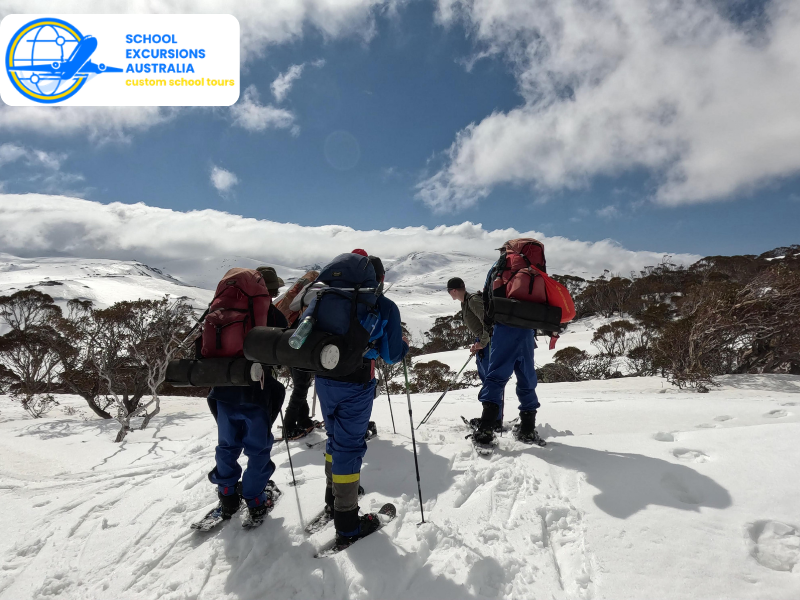
How Can Snow Become More Than a Recreational Activity?
Snow is the most eagerly awaited aspect of the winter school trip for many students. Nevertheless, snow school trips to Australia will allow children to gain valuable scientific knowledge of geography and natural sciences when leisure is combined with observation.
Snow is an excellent tool for studying the phenomenon of precipitation, temperature, and water reservoirs, as well as seasonality. Children can study snow, which is either fresh, compressed, or melted.
Useful investigation questions include:
- Why does snow remain longer in some locations?
- How does compacted snow differ from untouched snow?
- What happens to surrounding waterways when snow melts?
- How do weather conditions affect visibility and safety?
- How does artificial snowmaking interact with tourism operations?
Snow is the most eagerly awaited aspect of the winter school trip for many students. Nevertheless, snow school trips to Australia will allow children to gain valuable scientific knowledge of geography and natural sciences when leisure is combined with observation.
Snow is an excellent tool for studying the phenomenon of precipitation, temperature, and water reservoirs, as well as seasonality. Children can study snow, which is either fresh, compressed or melted.
How Can Human Activity Be Studied in an Alpine Setting?
The alpine environment is not separated from people. Facilities at the resort, roads, pathways, accommodation facilities, water facilities, and tourism facilities give an opportunity to study the relationship between environmental conservation and economic development.
Field trips to the alpine area of Victoria will offer an opportunity for students to study how tourists can be accommodated and the way waste, erosion, traffic, water, and wildlife habitat disturbance can be managed.
A simple field comparison can include:
Observation area | What students examine | Question to consider |
Walking trail | Surface wear and drainage | How is erosion being controlled? |
Resort precinct | Buildings and visitor services | How has tourism changed the landscape? |
Vegetated area | Trampling and plant cover | Why should visitors remain on marked paths? |
Lookout or high point | Roads and settlement patterns | How does terrain influence development? |
This helps students understand the necessity of equanimity in environmental management. Access, recreation, and regional employment represent significant aspects but equally important aspects are conservation and cultural responsibility.
How Does an Alpine Program Develop Personal Capability?
The outcome of an activity will not always be shown on a sheet of paper. Gaining experience of a new environment, dealing with winter clothing, and taking part in teamwork exercises can enhance one’s decision-making, communication, and self-regulation skills.
An Alpine School Camp in Victoria program may give students opportunities to:
- Prepare personal equipment responsibly
- Monitor their comfort and physical condition
- Communicate clearly within a walking group
- Support classmates during challenging activities
- Adapt when weather alters the schedule
- Follow instructions in a changing environment
Such findings will be more valid if the teacher makes them specific. One simple reflection at night will give students an opportunity to think about such questions as what has been helpful for their group, what was the moment of significance in terms of communication, and how they behaved after changing the plans.
What Planning Is Needed for an Alpine Excursion?
Since weather conditions in the Alps may change very quickly, one has to think not only about transportation and accommodation, but also about other things. First of all, one needs to have an outline which starts with the educational goals of the trip.
What Should Schools Confirm First?
The organising team should determine:
- Curriculum outcomes and intended student learning
- Student age, experience and support requirements
- Proposed activities and required skill levels
- Travel duration and realistic activity times
- Accommodation, meals and equipment arrangements
- Staff qualifications and supervision responsibilities
- Communication coverage and emergency procedures
- Alternative activities for unsuitable conditions
Schools in the state of Victoria must implement the excursion guidance and policy from the Department of Education, which stipulates approval and consent processes, medical details, risk management, supervision, weather, adventures, etc. Policy and Advisory Library: Schools operating in other regions must comply with respective authorities.
What Needs to Be Confirmed in Case of Involvement of External Provider?
Though the external organization may have certain specialists, equipment, as well as local knowledge at its disposal, the school should still execute its duty of care. The document states that the school should make an inquiry with the service provider in Victoria regarding compliance with the minimum documentation requirements before the event takes place.
Teachers should request and review:
- Relevant licences, qualifications and experience
- Public liability insurance
- Activity plans and emergency procedures
- Equipment inspection and maintenance processes
- Staff responsibilities and supervision arrangements
- Accessibility provisions
- Weather cancellation or modification policies
- Procedures for medical needs and medication
The program should not rely on assumptions. Responsibilities must be clear before students leave school.
How Should Weather and Equipment Be Managed?
Alpine weather should be monitored continuously prior to and during the trip. Weather conditions may vary greatly from those in lower areas and cold temperatures may become more dangerous in combination with wind, rain and wet clothes.
The Bureau of Meteorology’s Victorian weather service provides forecasts, observations, and warnings, including information about Australian Alpine regions. Staff should keep track of official forecasts and set clear guidelines for changing, cancelling or delaying any activity.
A student equipment list may include:
- Waterproof outer jacket
- Warm insulating layers
- Beanie and gloves
- Sturdy enclosed footwear
- Spare socks and dry clothing
- Water bottle and packed food
- Sun protection
- Personal medication
- Small backpack
- Any snow-specific equipment required by the program
Families should receive the list early enough to ask questions or arrange borrowed equipment. Schools should also have a discreet process for assisting students who cannot obtain specialised items.
How Can Teachers Connect the Trip to Classroom Learning?
The educational importance of outdoor education in mountainous areas becomes more essential when taking into account the understanding gained before and after the student field trips.
Before going on the trip, for example, learners should map the terrain, explore the plants and wildlife, and gather information on climate data or surroundings’ impact. This implies that learners will be able to use specialized terminology and theoretical knowledge during their trip.
While on the course, learners can document relevant data in terms of written notes, photos, drawings or comparisons of the weather. Data gathering should be limited so as not to disrupt the experience
After returning to school, students might:
- Map changes observed across an elevation profile
- Explain an alpine plant or animal adaptation
- Evaluate the environmental effects of tourism
- Compare forecasts with recorded conditions
- Recommend measures for reducing visitor impact
- Produce a report, presentation or fieldwork response
This three-phase structure prevents the visit from being a standalone event and provides them with proper data about students’ knowledge.
Which Queries Should Be Raised by Educators Before Approving the Program?
A good program must endure the tests of practicality and educational effectiveness. Before approval, teachers can ask:
- Which curriculum outcomes will the activities address?
- What will students investigate rather than merely view?
- Are the activities suitable for this particular cohort?
- What changes when snow, wind or visibility affects the plan?
- Are staff roles and provider responsibilities documented?
- How will medical, accessibility and dietary needs be managed?
- What evidence will students collect?
- How will the learning continue after the trip?
Clear answers indicate that the experience has been designed as an educational program rather than a destination-led itinerary.
Making the Most of the Learning Experience of an Alpine Visit
An effective mountain program involves having a purpose for each component of the trip. This aspect has the chance to supply the proof of the education process; nevertheless, defining the right inquiry, selecting appropriate exercises and conducting post-trip contemplations will assist learners in obtaining the knowledge. In the process of making preparations for the journey to the Alps, you need to focus on your aims and group characteristics. The following step is to get to know the program “Alpine Regions.”
What Are the Common Questions That Teachers Have Regarding Alpine Programs?
Not necessarily. It may be good for snow-based learning, but other seasons may provide better conditions for such disciplines as ecology, geography, bushwalking, or environmental management. The choice of the season depends on the specifics of learning outcomes.
No. Research, mapping, ecosystem research, or tourism studies may produce a valuable programme without any adventure activity. It is very important that any chosen activity meets the requirements as far as learning is concerned and fits the abilities of students.
Usually, multi-day programmes require a few months’ preparation. This preparation includes everything from checking the availability of the place to the requirements of health references and equipment.
In most cases, yes. Success will depend on the proper selection of activity, equipment, planning, and communication with the school.
Schools should follow their own risk management and emergency plans and instructions regarding the specific activity.
