Sustainability may prove hard to teach when all the students are exposed to is its definition in class through diagrams and concepts. Terms like biodiversity, conservation, environmental changes and sustainable use of resources make more sense when the students are able to see how these terms work in a natural setting.
Those teachers who are looking into south coast outdoor learning schools and excursions will find the NSW South Coast to be an ideal place for learning about sustainability in practice. Coastal, watery, bush or natural settings provide environmental concepts that become subjects for investigations by the students.
But the point here is not just to take the students out into the open. Sustainability education calls for a specific inquiry question, relevant activities, and use of evidence from observation.
Why Sustainability Learning Works Outside the Classroom
There is always interplay between people, environments, resources, and decision-making. Such relationships are much easier for students to grasp when they are observed firsthand.
For instance, when the students are in the coastal environment, they can ask questions on such issues as erosion, habitat preservation, tourism, waste management, biodiversity, and land utilization in the same place. Instead of just learning that humans impact ecosystems, the students can find proof and try to establish why things happen.
Outdoor learning may inspire students to:
- Observe environmental conditions directly
- Ask questions based on real evidence
- Compare managed and natural environments
- Consider different perspectives on land and resource use
- Record information for later analysis
- Connect individual behaviour with broader environmental outcomes
The excursion then becomes part of a structured learning sequence rather than simply a day away from school.
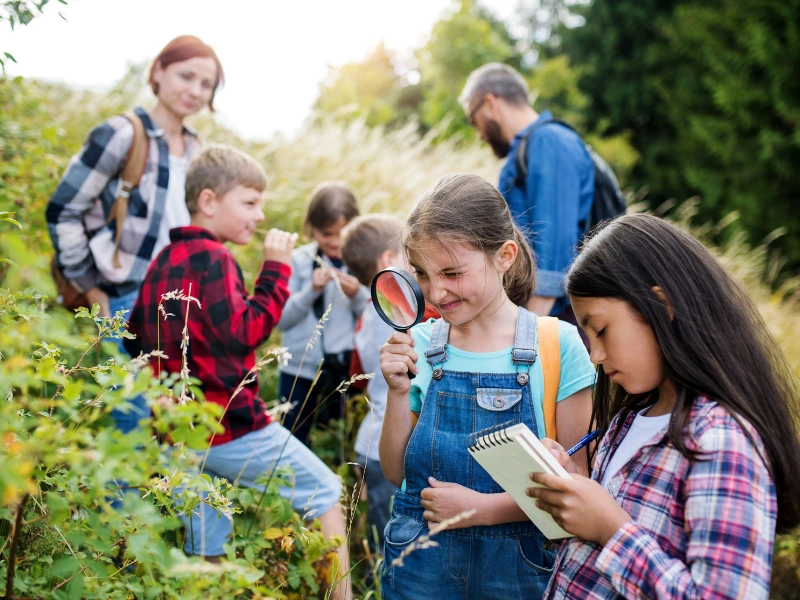
How South Coast Outdoor Learning Schools Can Build Sustainability Lessons
A successful sustainability excursion should begin with the learning objective rather than the destination.
Before selecting a beach, wetland, forest or environmental education site, teachers should decide what students are expected to investigate. This makes it easier to select activities that contribute directly to curriculum outcomes.
Start With One Strong Inquiry Question
A clear question gives the excursion direction.
Questions could be based on the students’ age and the subject and include:
- How does human action influence the coastal environment?
- What allows an environment to resist changes?
- How can natural sites be used by local communities while still preserving the biodiversity?
- What are the signs that indicate sustainable management of the environment?
- How do people’s actions influence habitats in the long run?
These questions can be examined before the excursion, evidence gathered while on the field trip, and then analyzed after returning to school.
Such a method will allow making a full-fledged study of an excursion.
Use South Coast Environments as Evidence
Different environments along the South Coast can support different sustainability concepts. The educational value comes from how students investigate the location, not simply from visiting it.
Coastal and Marine Environment
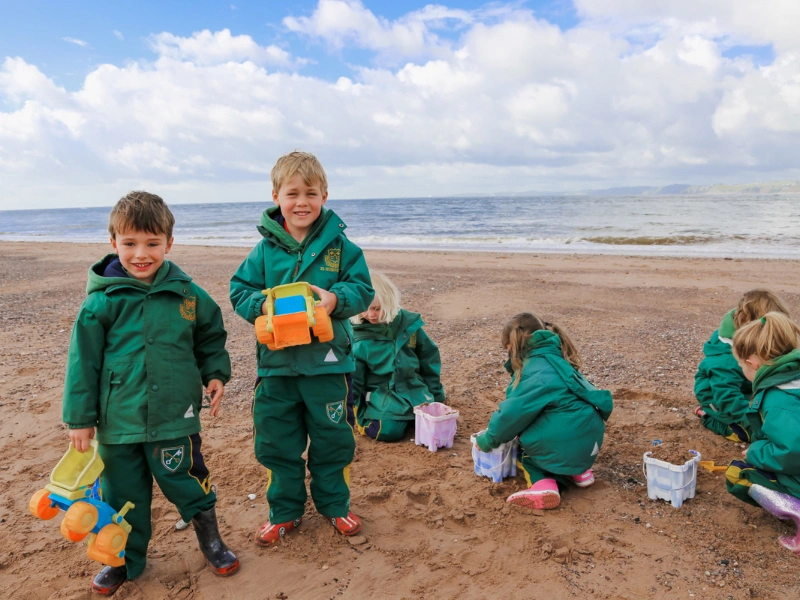
Examples of what one can learn through beaches, dunes, estuaries, and coastal reserves include erosion, diversity, protection of habitat, pollution, and man’s interaction with the environment.
During fieldwork at the coast of NSW, students can examine different aspects of the coast, look at plants in the dunes, see erosion or the impact of tracks and fences.
Rather than having students describe what they see, teachers could ask why particular features are significant.
For example:
How might vegetation in this area help protect the surrounding coastal environment?
A question like this requires students to connect observation with environmental processes.
Forests and Bushland
Bushland can provide opportunities to explore habitats, biodiversity, ecological relationships and conservation.
Students do not necessarily need to identify every species. They can investigate environmental indicators such as canopy cover, leaf litter, habitat structures, tracks, introduced vegetation and evidence of human disturbance.
Comparing two areas can be particularly useful. Students might consider why one location supports different vegetation or shows more evidence of human activity than another.
Rivers, Wetlands and Estuaries
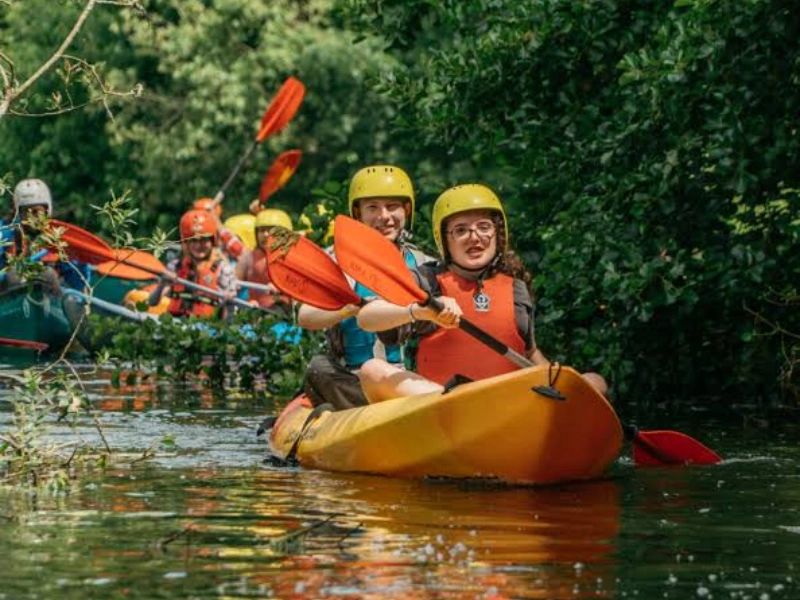
The aquatic environment could pose questions relating to catchments, water quality, pollution, habitats, and material transport within ecosystems.
Questions could also be raised regarding how actions in one part of a catchment affect the environment further down the line. The wetland environment could be used to show how an environment serves multiple purposes for different living organisms, water systems, and nearby communities.
This illustrates the interconnectedness of sustainability issues.
Turn Observation Into Investigation
Learning from unstructured observations does not usually happen in depth. The learners should have a reason for observing something and means for documenting evidence.
Fieldwork may be kept easy but at the same time inspire reflection.
Students might:
- Record observations at several locations
- Sketch habitat features
- Map evidence of human activity
- Compare environmental conditions
- Photograph relevant features where permitted
- Record signs of environmental management
The important part comes next: students should interpret what their observations might mean.
A worksheet asking students to list five plants may test observation. Asking how vegetation contributes to the health or stability of an ecosystem requires them to apply environmental knowledge.
Make Human Impact Part of the Investigation
Sustainability is not only about identifying environmental problems. Students also need opportunities to consider how communities balance different needs.
Coastal areas may simultaneously provide habitat, recreation, tourism opportunities and community spaces. Environmental management therefore often involves decisions about how people can use a location without unnecessarily damaging it.
During school trips to the South Coast NSW, students can examine boardwalks, designated paths, fencing, waste facilities, signs or restricted areas.
They might discuss:
- What environmental problem is this strategy addressing?
- Who benefits from the strategy?
- Does it restrict particular activities?
- What might happen if the strategy were removed?
- Could another approach achieve a similar result?
This shifts sustainability education from basic awareness towards analysis and decision-making.
Include Aboriginal Perspectives With Appropriate Context
Learning about sustainability can include Aboriginal perspectives and relationships with Country when these are relevant to the program and presented appropriately.
Rather than treating Aboriginal knowledge as a generic addition to an environmental lesson, schools should seek learning experiences connected to the Country being visited and use credible resources or recognised local knowledge holders.
Where appropriate, Aboriginal-led educational experiences can help students explore relationships between people, place, culture, environmental responsibility and long-term care for Country.
Give Students an Active Fieldwork Role
Students often engage more deeply when they have a clear responsibility during an excursion.
Instead of every student completing an identical worksheet, small groups can investigate different parts of the central sustainability question.
During south coast student tours, one group might document biodiversity indicators while another investigates human impact. Another group could examine environmental management strategies.
Possible roles include:
- Habitat observer
- Human-impact recorder
- Environmental management investigator
- Mapping lead
- Field-note recorder
- Photographer or sketch recorder where appropriate
Students can then bring their findings together and consider how the different observations connect.
Connect the Excursion Directly to Curriculum Outcomes
Excursions become stronger learning experiences when teachers can clearly identify what students should learn and how the field activities contribute to those outcomes.
The NSW Department of Education‘s current excursion procedures state that teachers must link an excursion’s educational value to curriculum outcomes and consider anticipated learning outcomes when planning. The procedures also cover risk assessment, inclusivity, student needs, transport, consent and supervision.
Sustainability-based field trips can be used to foster knowledge in various subjects like Geography and Science depending on the level of the students and the current curriculum.
The NSW Curriculum is concerned with sustainability, as is illustrated by concepts like environmental interdependence, biodiversity, habitat conservation, and participation in sustainability.
Teachers need to ensure that the present syllabus concerning their class is considered prior to determining that an activity meets a particular requirement.
Do Not Try to Teach Every Sustainability Topic
One particular coastal site could provide opportunities for discussions on biodiversity, pollution, erosion, tourism, water quality, conservation, climatic and cultural aspects.
Attempting to incorporate everything into one trip may undermine the entire learning experience.
A more focused south coast school excursions NSW program could concentrate on three connected questions:
- How does this ecosystem function?
- How are people affecting the environment?
- How is the environment being managed?
Other observations can still become part of class discussion, but the main learning objective remains clear.
This focus also makes post-excursion assessment easier because students know what evidence they were expected to gather.
Bring Field Evidence Back Into the Classroom
The excursion should not finish when students leave the location.
Post-excursion activities allow students to organise observations, test their original ideas and form evidence-based conclusions.
Depending on the year level, students could:
- Prepare an environmental field report
- Compare two study locations
- Evaluate an existing management strategy
- Develop a sustainability proposal
- Create an annotated environmental map
- Present recommendations to the class
Younger students might use drawings, photographs, group discussions, or a shared class action plan.
Whatever format is selected, the activity should return students to the original inquiry question.
Practical Excursion Planning Supports Better Learning
Educational objectives are only one part of planning. Accessibility, student needs, transport, weather, supervision and site-specific risks also affect whether an excursion works effectively.
The NSW Department of Education requires relevant government schools to consider educational value, duty of care, inclusivity and risk management when planning excursions.
Before the excursion, teachers should consider:
- Site access and facilities
- Student learning and support needs
- Weather and environmental conditions
- Risk assessment requirements
- Appropriate clothing and equipment
- Transport arrangements
- Supervision requirements
- Emergency procedures
- Parent or carer communication and consent
Schools should follow their own applicable procedures alongside current NSW requirements.
Good preparation also safeguards learning time. Students who have an idea of where they are heading and what they are looking for are able to utilize their trip time well.
How Can Teachers Tell Whether the Excursion Worked?
Enjoyment has its importance, but it must not be the sole criterion for judging the success of an excursion.
Teachers may evaluate how well students understand some things after the trip that were difficult for them to understand before the trip.
The students will have understood if they:
- Use field observations to support a conclusion
- Explain connections between human activity and environmental change
- Evaluate an environmental management strategy
- Apply classroom concepts to a real location
- Recommend realistic sustainability actions
A short reflection, presentation or assessment task can reveal whether the experience strengthened students’ understanding.
Turn Sustainability Into Something Students Can Investigate
Sustainability takes on greater significance when students get to see the relationships in the environment for themselves instead of having them explained. If properly planned, an excursion will give the students material that they can examine, analyze and compare against what they know.
The best way for south coast outdoor education schools to approach the topic is to formulate an educational question and then choose suitable environments and activities to study it. Fieldwork can then continue back at school through analysis, discussion and assessment.
When planning the next sustainability excursion, start with what students should be able to explain when they return. From there, identify the location, evidence and activities that can help them reach that outcome.
Frequently Asked Questions
An effective sustainability excursion combines a clear inquiry question with relevant field activities and classroom follow-up. Students should have opportunities to collect evidence and use it to explain environmental relationships.
Coastal areas, bushland, wetlands, rivers and estuaries can all support environmental learning. The right location depends on the curriculum topic, students' age, accessibility and intended learning outcomes.
Worksheets can be useful when they guide observation rather than dominate the experience. Field notes, maps, sketches, group investigations and focused questions can encourage more active participation.
Introduce the main inquiry before the excursion, gather evidence during fieldwork and use that evidence in a follow-up activity. This helps students connect practical observations with curriculum concepts.
A small number of connected concepts is usually more manageable than trying to cover every environmental issue visible at a location. The excursion should remain focused on its main learning outcomes.
