A rainforest boardwalk, a habitat for koalas and a rocky coast can be seen as three different lessons, but at Port Macquarie, they are all part of one environmental lesson. Port Macquarie school excursions enable students to discover how water, plants, animals and people interact with each other in the Mid North Coast region.
This means that the region will prove to be more than just a simple place to go out into nature. The students will be able to study the actual habitats, gather field information and learn the reason why the conservation of one animal needs a bigger picture. With a proper itinerary, the trip could provide educational benefits for science, geography, sustainability, ATSILHH and PD.
Why Does Port Macquarie Work as a Connected Outdoor Classroom?
Being located at the point of intersection between rainforests, eucalyptus forests, rivers, estuaries and the coast of the Pacific Ocean, the location of Port Macquarie would enable the students to experience firsthand how the environment changes from one place to another.
For instance, the trip could start in the canopy of the rainforest before heading to the koala habitat or coastal estuary/ headland. This adds yet another element to the same investigation:
How do interdependent habitats help wildlife, and what can happen when there is interference with this balance?
This sets the purpose for the day’s learning activities. Students are not only learning about plants and animals, but they are also learning about how the habitats, food sources, water, shelter, movement, and land use by humans all interrelate.
There are three catchments that make up the Port Macquarie-Hastings area. They include the Hastings River catchment, the Lake Cathie-Lake Innes catchment, and the Camden Haven. Out of the three, the Hastings River catchment is the biggest and is where much of the drinking water comes from.
What Do Students Get to Learn During Port Macquarie School Tours?
It provides a platform for learning various subjects within the syllabus but without any unrelated activities in the program. A rainforest walk can help introduce habitat structures. Koala preservation can show the significance of wildlife corridors. The beach study can further the discussion on erosion and marine litter.
Students can explore:
- How plants adapt to rainforest and coastal conditions
- Why habitat quality matters to native wildlife
- How food trees support koala populations
- How stormwater and litter reach marine environments
- Why coastal landforms change over time
- How people manage competing uses of natural areas
- How Aboriginal knowledge connects culture, seasons and Country
The value comes from making these topics part of one investigation. A discussion about rainfall beneath the forest canopy can later connect with runoff, estuary health and marine pollution.
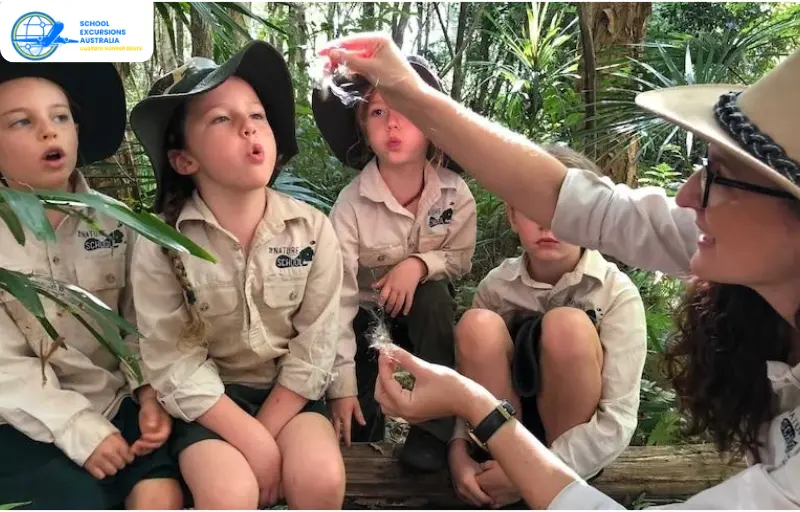
How Can Sea Acres Introduce Rainforest Ecology?
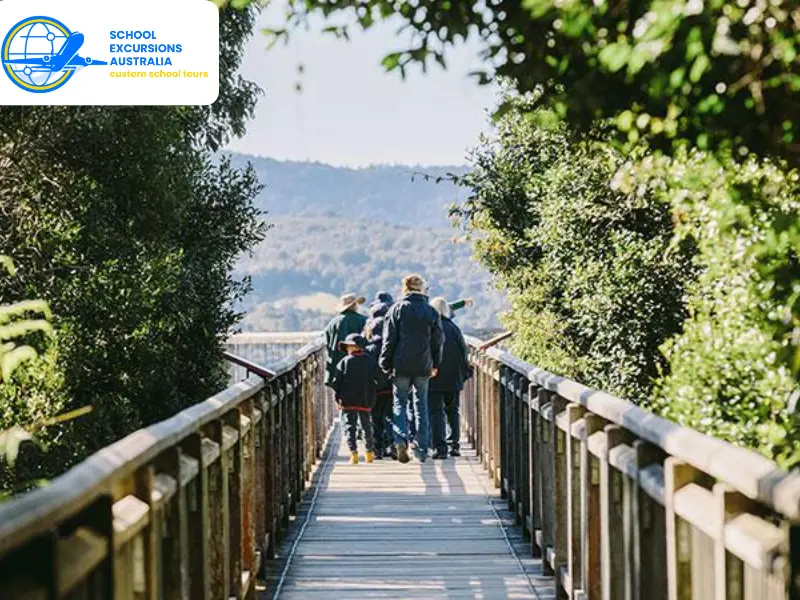
There is a special kind of coastal subtropical rainforest located in Sea Acres National Park, which is located right next to Port Macquarie. With its raised walkway, students can explore the rainforest without damaging the environment beneath them.
Through this 1.3 km walkway, students will be able to examine the various layers of the vegetation, as well as find any evidence of animal presence, along with finding any variations in light, temperature and moisture in certain areas. Apart from this, there is also a Geography Stage 2 program for NSW National Parks where students can observe the rainforest in various practical ways.
What Evidence Can Students Collect in the Rainforest?
The field task ought to be quick enough that the students remain engaged with their environment. Instead of doing the long worksheet, the groups could do three observations each from various points.
They might compare:
- Canopy cover
- Ground moisture
- Leaf size and shape
- Visible roots, vines and epiphytes
- Bird or insect activity
- Natural and human sounds
- Evidence of decomposition
Students can use their observations to explain how the rainforest is self-sustaining in terms of its own conditions. Temperature is affected by shade, leaf litter contributes to the cycling of nutrients, and a thick vegetation provides a food supply as well as shelter of different levels.
Why is the Boardwalk Important?
In addition to being a walkway, the boardwalk could also be considered a source of conflict within the discussion regarding visitor management.
The pupils can ponder the reasons for controlling access to vulnerable habitats and ways of minimizing disturbance. The students can review the extent of the boardwalk’s success in the way of harmonizing education, recreation, and conservation.
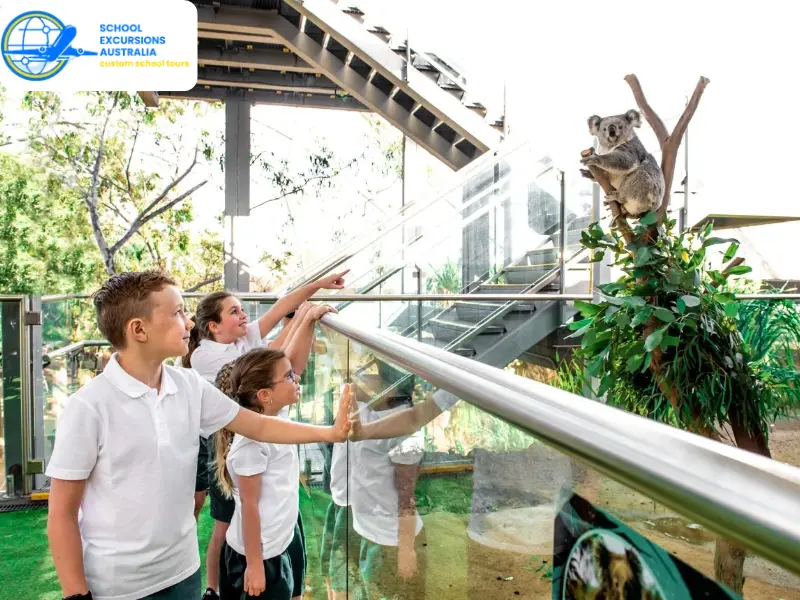
What Lessons about Conservation Can Koalas Teach Us?
The small town of Port Macquarie is famous for being home to a number of koalas; however, the educational aspect should not only entail looking at a single species. Strong wildlife education lies in asking questions about what koalas need to survive in their changing environment.
Koalas are also important for the town of Port Macquarie and for those koalas living in places close to urban centres. The destruction of habitats, the loss of habitat, deaths due to vehicle strikes, disease, fire, and changing climate conditions can all have an effect on their existence.
The student wildlife tour of Port Macquarie can investigate the concept of animal protection versus protection of its habitat.
What Makes a Tree Useful to a Koala?
Not every tree provides the same value. Koalas use particular eucalypt species for food, shelter and movement. Tree selection may vary according to location, soil, season and habitat condition.
Students could practise identifying:
- Leaf arrangement and shape
- Bark type and colour
- Tree height and canopy spread
- Signs of browsing
- Scratches or other animal evidence
- Nearby roads, fences and buildings
- Connections with surrounding vegetation
The NSW Government has developed a guide for koalas’ habitat trees in the Mid North Coast region which will help residents identify and conserve appropriate trees. environment.nsw.gov.au. It can be used either prior to a visit or after a visit for habitat mapping.
What Is The Importance Of Wildlife Corridors?
If there is inadequate space for wildlife movement through different areas such as feeding grounds, resting grounds, and breeding grounds, then the habitat area may not be sufficient for them.
Students can use a simple map to mark:
- Continuous areas of vegetation
- Possible movement routes
- Barriers such as roads or cleared land
- Safe crossing points
- Locations where revegetation may improve connection
This changes conservation from a vague idea into a practical spatial problem.
How Can the Coast Support Marine and Earth Science?
Going to the coast helps us learn about erosion, deposition, tides, rock pools, marine ecosystems and waste transportation. The best activity choice is up to age group, tide times, weather conditions and access permission.
Schoolchildren often do not have to collect specimens in order to conduct a useful study. They will simply need to observe carefully to get evidence without too much disturbance.
A shoreline study may involve:
- Sketching a coastal landform
- Comparing exposed and sheltered areas
- Recording the location of marine debris
- Observing zonation in a rock platform
- Measuring wind direction
- Identifying evidence of erosion
- Noting how visitors use the site
A discussion about litter can connect the coast to streets, drains and catchments. Port Macquarie-Hastings Council provides an Ocean Classroom program that teaches students how plastic waste reaches the sea and what they can do to reduce it.
How Can Students Compare Port Macquarie’s Environments?
Comparison encourages students to explain patterns rather than list isolated observations. Use one recording sheet across several locations.
Environment | Evidence to record | Useful learning question |
Rainforest | Canopy, moisture and leaf litter | How does vegetation shape conditions below it? |
Koala habitat | Food trees and habitat connections | What does a viable wildlife habitat require? |
Estuary | Water movement and surrounding land use | What enters the water from the catchment? |
Shoreline | Erosion, debris and human activity | How do natural processes and people affect the coast? |
After the trip, students can refer to the chart they made and conclude about the connections that were the most noteworthy. Some examples can include vegetation, which minimizes the chance of erosion, and improper waste disposal systems, which allow waste to move from streets into rivers and finally into the sea.
How should Indigenous knowledge be included in the process?
Port Macquarie town is situated on the Birpai land. It is crucial to remember that the Indigenous ways of knowing are from close relations of the people with the land, seasons, plants, animals and waterways.
Sea Acres provides a guided program by Aboriginal people for schools that provides information about the history and stories of the Birpai people. The program covers naturally available food and materials on the rainforest boardwalk and the spiritual and seasonal connection with the Country.
This content must be provided through the use of suitable Aboriginal teachers or sources. Teachers must not make bush foods appear like some kind of novelty.
Useful preparation can include:
- Identifying the Traditional Custodians of the places being visited
- Explaining why permission and cultural authority matter
- Discussing respectful listening and questioning
- Avoiding the collection of plants or cultural materials
- Reflecting on how Indigenous and scientific knowledge may examine the same environment differently
How Should Teachers Build the Day Around Learning?
An efficient educational tour in Port Macquarie requires a proper sequence that uses every sight to answer a question and set students up for what was to come.
For example:
Before the Tour
The teacher should go over some local maps, talking about the basic habitats and one of the questions that students should think about. Then students will be asked to make predictions about where they might find the biggest canopy cover, barriers to wildlife movement, or marine debris.
During the Tour
The teacher will assign one evidence task at each site. Students can be asked to take a note or make a sketch, or formulate a question to be answered later.
Post Tour
It is imperative that the teacher informs learners about the connection between the information collected and illustrates how the protection of coastal fauna relies on what happens in the forest, streets, suburbs, basins, and the shore.
What Practical Considerations Must Schools Take Into Account?
The preparation of school excursions in Port Macquarie must consider the environment of each location visited. The weather conditions near the coast may vary, the boardwalk may be slippery, and there won’t be much outdoor shelter.
Schools should confirm:
- Program suitability for the year level
- Walking distances and surface conditions
- Accessibility requirements
- Toilets, drinking water and lunch facilities
- Coach parking and student drop-off points
- Tide conditions for shoreline activities
- Weather and extreme heat procedures
- First aid and emergency communication
- Required adult supervision
- Venue-specific clothing and equipment
For the Sea Acres rainforest program, NSW National Parks recommends long pants, enclosed comfortable shoes, a hat, sunscreen, a jumper, a raincoat, food, water and necessary medication. The boardwalk is rated as easy access, although teachers should confirm individual student requirements directly.
How Can Schools Reduce Environmental Impact During the Visit?
The excursion should model the behaviour being taught. Clear expectations help students protect habitats without making the visit feel restrictive.
Students should:
- Remain on marked paths and boardwalks
- Observe wildlife without feeding or touching it
- Leave plants, rocks and shells in place
- Carry reusable food and water containers
- Secure loose rubbish
- Keep noise low near wildlife
- Clean footwear when required to limit the spread of pathogens
Teachers can assign an environmental observer to each group. That student records one example of responsible site management and one pressure affecting the location.
Conclusion
Post-trip exercises should be based on the data collected during the trip and should not depend on students remembering all the information by heart. A map, a brief report or a proposal for a habitat can indicate whether the students have grasped the relationships between the different environments.
While planning an excursion in Port Macquarie, the schools can start off with the destination page of Port Macquarie from the website of School Excursions Australia, and then choose the activity that will suit their curriculum. The next thing is to check the availability of the program and itinerary.
FAQs
Yes, but the day's activities should emphasize two or three activities within close proximity to each other. More activities mean less time for observation and the day would seem rushed.
Sea Acres rainforest walkway is easy access and has accessible car park facilities. Schools should always negotiate any requirements of the students with the venue first.
No, animal behavior cannot be programmed. The learning task should be about habitat, signs and conservation. The learning task would be just as good even without a sighting.
These are the only necessities that you will need. The special equipment provided by the venue can be found out by speaking to the venue staff.
Always plan an alternate activity in case of unsuitable weather. Indoor activities like interpretation, habitat map construction, resource analysis or observation from an appropriate site would be sufficient.
