Learning about History takes on new meaning when learners have the chance to move beyond their books and explore the real people, places and events that made Australia’s history. Historical school trips to Sydney offer students a chance to visit historic sites and learn about Australia’s history in practice.
From the historic location of The Rocks to the city’s museums and heritage, Sydney presents a wonderful platform for students to research the history of Australia. A history trip properly designed can be an excellent means to spark the interest of students.
Why Sydney Works So Well for History Excursions
There is much history embedded in Sydney, which can be studied through a small geographic region. The students can visit locations where there are reminders of the early colonizers of the region, to locations where there are symbols of government, culture, and technology, among others in modern Australia.
Through such excursions, students can learn history more effectively because they can compare various eras and angles instead of analyzing individual events.
A history-oriented excursion would assist students to:
- Identify evidence of Australia’s past in buildings, streets and objects.
- Understand how Sydney developed over time.
- Explore the experiences of different communities.
- Investigate the impact of colonisation and settlement.
- Examine the development of government and civic institutions.
- Connect historical events with present-day Sydney.
- Develop observation, research and critical-thinking skills.
The city also makes it possible to combine history with geography, civics, English, visual arts and cultural studies, depending on the age and learning objectives of the group.
The Rocks: Where Students Can Read History in the Streets
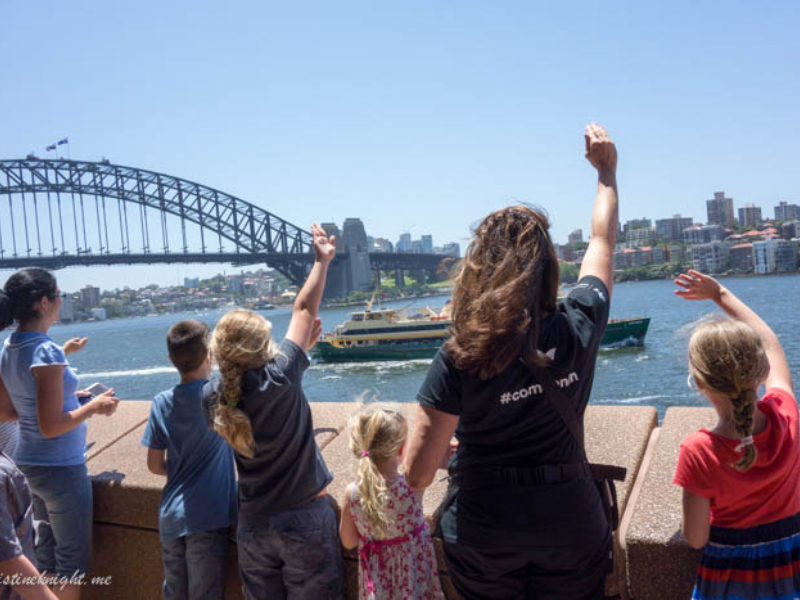
“The Rocks” is among the most helpful areas to begin an exploration into history since students will be able to understand how the constructed environment is able to keep information about the previous eras.
As opposed to being taught about the colonial history of Sydney only using textbooks, students will get a chance to experience architectural history, laneways, streetscape, and the port environment. This exercise using a walk around will allow students to ask questions as to why those buildings were built and what the era looked like.
A walking tour exercise will also appeal to younger children by incorporating observation and storytelling. Older students can investigate more complex questions about settlement, urban development, working life and historical perspectives.
Turn a Walking Tour Into an Investigation
Teachers can give students a simple observation sheet containing questions such as:
- What is the oldest-looking building you can identify?
- What materials were used in historic buildings?
- How is the area different from a modern city street?
- What clues tell us about how people lived and worked?
- Which parts of the area appear to have changed most significantly?
These activities encourage students to treat the destination as historical evidence rather than simply somewhere to visit.
Hyde Park Barracks: Connecting Students With Convict History
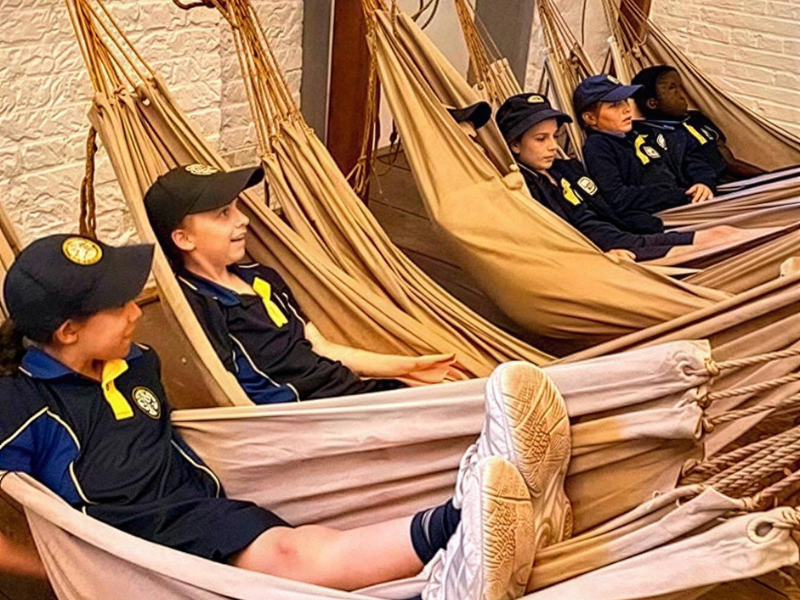
Hyde Park Barracks provides another valuable opportunity to explore Australia’s colonial history. Its stories can help students investigate the convict system, living conditions and the development of early Sydney.
For students studying Australian history, a heritage site can make abstract concepts easier to understand. Questions related to accommodation, employment, discipline, and daily life gain greater clarity as students are faced with the environment in which these aspects occur.
The teacher can prepare the students for the trip through the use of terminology and historical questions. Following the trip, students can compare their expectations to the facts they discovered.
Questions Students Can Explore
A simple inquiry activity might ask students to consider:
- What does the building tell us about life at the time?
- What evidence can be found about the people who lived there?
- How might different people have experienced the same place?
- What can physical objects reveal that a textbook cannot?
- How has the site’s purpose changed over time?
This approach encourages students to move beyond memorising dates and develop historical interpretation skills.
The Big Dig: Discovering Archaeology in Sydney
Archaeology is an interesting way to illustrate to students that history is something more than just something written on paper. The educational experience known as “The Big Dig” at The Rocks provides the opportunity to analyze archaeological evidence and consider how one could reconstruct history based on the artifacts found there.
The students’ experience will be of great help in creating a link between history and evidence for them. Even the smallest artefact or component of a building may make students ask who the object belongs to, what period it dates back to, and what information it provides about that time.
This method of learning will be the most effective in inquiry-based learning because students may be taught to think like historians and archaeologists and ask themselves questions such as:
- What can we learn from this object?
- What do we lack information about?
- What conclusions can be made?
- Is there more than one possible interpretation of the evidence?
- Why do we have to take a close look at historical evidence?
Museum of Sydney: Exploring People, Place and Change
An excursion to a museum may help students to connect the dots by gathering knowledge from various time periods and points of view. The Museum of Sydney would be most beneficial for studying the evolution of Sydney and people who shaped it throughout its history.
Teachers may give their students a few focused questions before the museum tour and thus ensure that students will collect particular pieces of information during their visit.
The following questions could be suggested to students:
- Which object/display should you choose?
- Which period does it belong to?
- Who might have used/created this object/display?
- What does it tell us about the society of that time?
- What questions does it raise?
It would turn a museum visit into a research exercise rather than a simple observation.
The Mint and Sydney’s Changing Economy
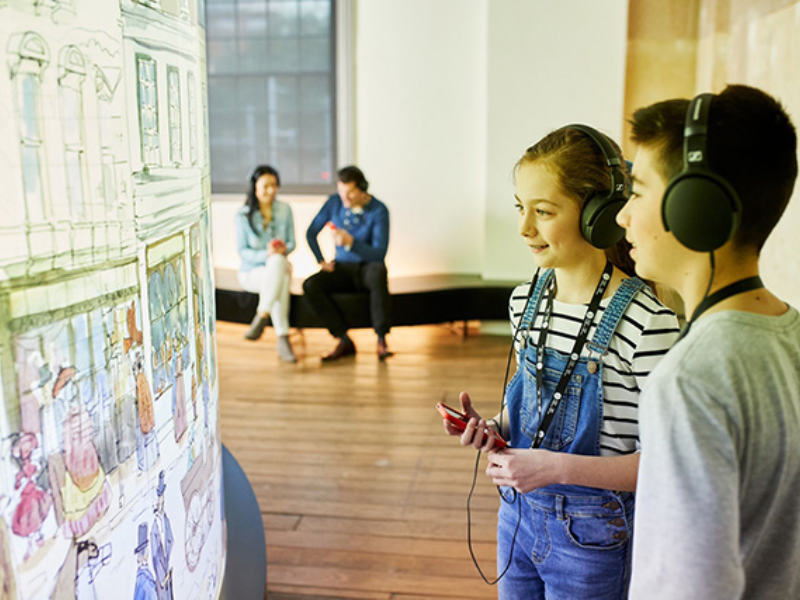
The Mint offers another perspective on Australian history by connecting students with the development of currency, manufacturing and economic life.
A visit can complement lessons about how societies organise trade and commerce. Students can explore how money has changed, why currency needs to be trusted and how technological developments have influenced production.
This website could also allow older students to explore the changes that have taken place in economic systems along with the development of Australian society.
By visiting places like The Rocks, Hyde Park Barracks, and The Mint, one can create a more holistic history lesson than merely visiting unrelated attractions.
Sydney Observatory and the History of Science
History excursions do not have to be limited to political or social history. Sydney Observatory can help teachers connect historical learning with science and technological development.
Students can investigate how people in earlier periods studied the sky, measured time and developed scientific knowledge. This provides an opportunity to demonstrate that scientific understanding also has a history.
A cross-curricular approach can make school trips to Sydney programs especially valuable because students can see how different subjects overlap in the real world.
How to Plan a Curriculum-Focused History Excursion
The strongest Sydney historical school trips begin with learning objectives rather than a list of attractions.
Step 1: Define the Learning Outcomes
Before choosing destinations, identify what students should understand or be able to do after the excursion.
For example:
- Explain key aspects of Sydney’s early development.
- Identify evidence of colonial history.
- Compare historical and modern environments.
- Interpret primary and secondary evidence.
- Understand different perspectives on Australian history.
Clear outcomes make it easier to choose relevant activities.
Step 2: Select Two or Three Connected Sites
Trying to cover too many attractions can leave students tired and reduce the educational value of each visit.
A better approach is to select sites that support one central theme.
For example:
Colonial Sydney
- The Rocks
- The Big Dig
- Hyde Park Barracks
Sydney and Civic Development
- The Rocks
- Museum of Sydney
- Parliament House
History, Science and Technology
- The Mint
- Sydney Observatory
- Powerhouse Museum
Excursions to School Australia currently offer the itinerary of Sydney with stops at The Rocks, The Big Dig, Pylon Lookout, Sydney Opera House, Parliament House, Hyde Park Barracks, The Mint, and the Powerhouse Museum.
Step 3: Prepare Students Before the Visit
Pre-excursion preparation can significantly improve engagement.
Teachers can:
- Introduce important historical terms.
- Provide a short timeline.
- Discuss the key people or communities connected with each site.
- Give students inquiry questions.
- Explain expected behaviour and safety requirements.
- Divide students into small research groups.
Students who know what they are looking for are more likely to notice meaningful details during the excursion.
Step 4: Build in Reflection
Learning should continue after students return to school.
Useful follow-up activities include:
- Creating a historical timeline.
- Writing a diary entry from a historical perspective.
- Comparing past and present photographs.
- Producing a group presentation.
- Creating a map showing important historical locations.
- Writing a short evidence-based response.
- Discussing how the excursion changed their understanding of Sydney.
Reflection helps students transform an enjoyable day out into lasting learning.
What Teachers Should Consider Before Booking
Factors to be taken into account when planning school trips for Sydney’s primary school children and other age groups include:
Age of the students.
- Group size and teacher-to-student supervision.
- Accessibility requirements.
- Walking distances and rest periods.
- Weather and suitable clothing.
- Meal and hydration arrangements.
- Transport and travel time between sites.
- Venue booking requirements.
- Risk assessments and emergency procedures.
- Student medical and individual support needs.
It is also useful to avoid overcrowding the itinerary. A shorter schedule with meaningful activities can often produce better learning outcomes than a rushed day containing too many stops.
Making History Meaningful for Primary Students
For school trips for Sydney primary groups, historical learning should be visual, interactive and age-appropriate.
Younger students can benefit from activities such as:
- Spotting historic features.
- Drawing buildings or objects.
- Completing simple observation sheets.
- Listening to historical stories.
- Matching objects to historical periods.
- Comparing old and modern Sydney.
- Creating a class timeline after the excursion.
The objective is to help students understand that history happened in real places and involved real people.
For older students, activities can become more analytical, focusing on evidence, competing perspectives, social change and cause-and-effect relationships.
A Better Way to Think About History Excursions
A successful history excursion is not simply about taking students somewhere old. It is about giving them a reason to look, question, interpret and discuss.
Sydney provides an unusually rich environment for this approach. A street can become evidence of urban development. A building can introduce students to social history. An archaeological site can demonstrate how evidence is discovered. A museum object can reveal something about everyday life.
When destinations are carefully connected to classroom learning, educational tours Sydney programs can help students understand that history is not fixed on a page. It is visible in the places around them and can be investigated through evidence and different perspectives.
Final Thoughts
Sydney provides a fantastic place to take classes on history excursions with its heritage precincts, museums, archaeology sites, civic buildings, and cultural centers that give students chances to integrate their class education with hands-on experience in real life.
The best way to conduct an excursion is through having a definite curriculum objective, selecting an appropriate number of locations, preparing the students prior to the field trip, and reflecting after the field trip. By using this method, a school trip could be not just a day out of class but could be transformed into an interesting research on the development of Sydney and of Australia.
In case you are thinking about taking a history-related excursion, please check out the school excursions in Sydney and see which places would suit your objectives the most.
FAQs
Students should bring comfortable clothing, suitable footwear, a water bottle, lunch or snacks if required, and any school-provided materials for activities. Teachers should also check whether individual venues have specific requirements.
The ideal length depends on the number of locations and the age of the students. A focused half-day visit can work well for younger groups, while older students may benefit from a full-day or multi-day itinerary.
Absolutely. Teachers can connect the visit with current history units by preparing students beforehand and following up with classroom activities, discussions, research or written reflections.
A good site gives students something they can observe, question or investigate. Buildings, artefacts, archaeological remains and first-hand accounts can all help students understand how people lived and how society changed.
Short observation tasks, group discussions, guided questions and simple challenges can encourage students to actively explore their surroundings rather than simply listen to information.
