The senior high school student has a lot more on his mind than just the next task to be done. He or she is beginning to plan for the future in terms of universities, careers, and independence after high school. In that respect, it can help a lot to have experiences which will relate those concepts to reality.
This is one of the reasons why student travel Australia can be useful for senior students.
An excursion that is carefully organized by the school can introduce students to workplaces, culture, higher education, nature, and new places.
The benefit of an excursion for the older student, however, is not merely to expose him or her to new surroundings. The excursion should provide the student with something to ponder, discuss, argue about, or apply back in the classroom. This brochure will examine why excursions still have value for the senior student.
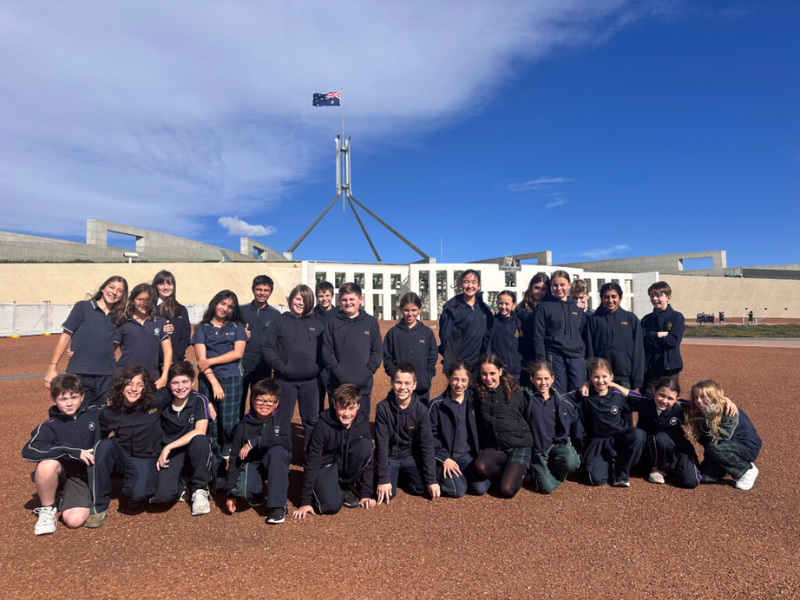
Senior Students Need More Than Classroom Learning
Learning in class tends to be very specific to subjects as one moves through high school. However, apart from gaining that theoretical knowledge, there is also room for experiential learning.
For instance, if one learns about the world of business, he or she will definitely be familiar with terms such as marketing and management. However, visiting a business in operation will give an idea of how those concepts are implemented. The same way, it is possible for science students to see practical aspects of research, conservation, and technologies in use.
It does not necessarily mean that every trip should be linked to a certain examination. In some cases, trips will become valuable for the exposure to opportunities that students did not consider before.
Experiences will be helpful for senior students if it encourages them to:
- Ask more thoughtful questions
- Look at things from various angles
- Use knowledge of the subject in practice
- Communicate with people not in the usual environment
- See the connection between school and future
Those skills are always useful regardless of the school subject.
Excursions Can Bring Career Possibilities to Life
Career talks can be somewhat abstract since they take place within the confines of a classroom. The students learn about various careers, courses, and industries without necessarily understanding what the career path entails.
An exposure to the workplace, industry, or university tour makes these options concrete.
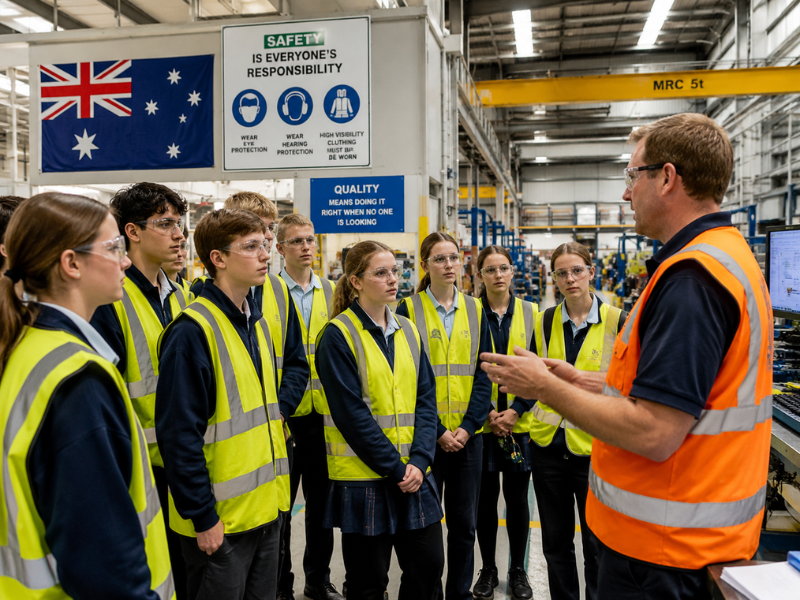
Seeing Different Workplaces
It would be of great advantage to students to visit organisations related to their fields of interest, such as technology firms, engineering firms, media organisations, research institutions, hospitals, or environment programmes.
The purpose here is not to convince the students to pursue a certain career; rather, it is to present them with the reality of how the industries run and the skills they utilise.
A work experience could raise some questions such as:
- What qualifications are necessary for this kind of work?
- How is an average day at work?
- Which school subjects are beneficial?
- What are the skills that are valued by the employer?
- What other positions are there in the same industry?
This would enable them to take informed decisions when they graduate.
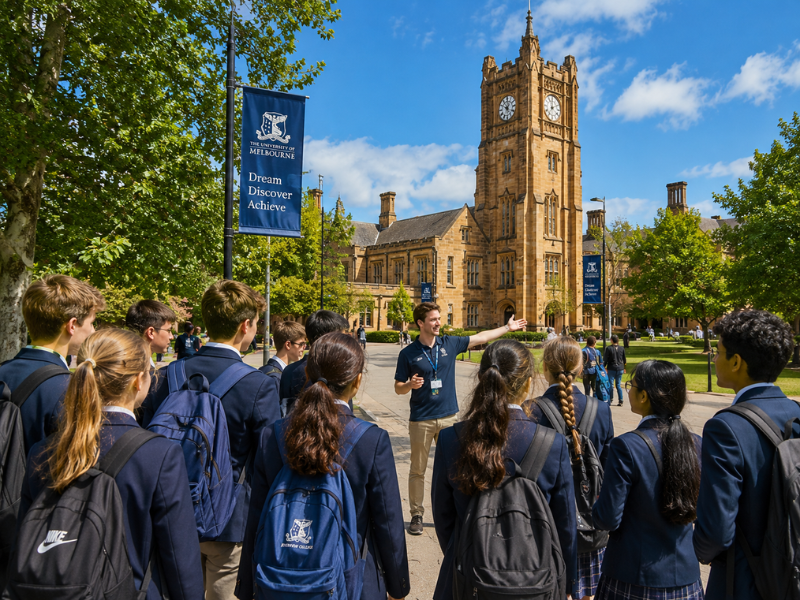
University and Further Study Visits
If someone intends to join a college or university, visiting the institution may be of added advantage.
The presence of different learning facilities like lecture rooms, laboratories, library, workshops, and other services at an educational institution enables the student to see clearly what their future may hold beyond their education.
It is possible that a walk around a learning institution which they had only heard about may suffice for some learners.
Learning Becomes More Meaningful When Students Participate
Students who are older have the capability to take on more advanced tasks compared to children, meaning that senior field trips will be more than just observation exercises.
The good program will see students researching, solving a problem, interviewing a person, gathering information or even discussing an issue.
For instance, a geography class can carry out research on the way a community solves its environmental issues. Business students can carry out research about the running of an organization while history students analyze documents from a historical site.
In such cases, the students will not just be receiving information but also applying information that they already have.
The difference is very crucial since once students have to interpret information or apply information that they know, then that exercise becomes unforgettable.
School Trips Can Build Independence
The senior high school learners have now reached the age of maturity, hence the need for more chances for independent learning.
An organized school trip is an environment that gives the learners a chance to be more independent under the supervision of the teacher.
The learners could find themselves handling their own things, following the timetable, communicating with other people, and making sound judgments throughout the day.
Simple things like these could assist the learners in becoming more confident.
An organized trip could motivate the learners to:
- Take care of their things
- Be punctual at the meeting point
- Perform independently as part of the group
- Communicate in case of difficulties
- Follow directions without having to keep reminding them
- Adjust in case the plan changes
All these may seem to be very insignificant things, but they form part of a bigger process of growing up from being a learner to a mature person.
Cultural Experiences Encourage Broader Thinking
Moreover, senior students belong to an age group that can understand cultural and social issues in depth.
A visit to a museum, gallery, cultural center, or important historical place would expose students to issues they do not come across in their normal life.
A cultural trip would allow students to discuss issues of identity, history, community, and social change. This would also allow them to think of different perspectives on an issue.
Such an education is especially important because it enables students to move from learning by rote to critical thinking.
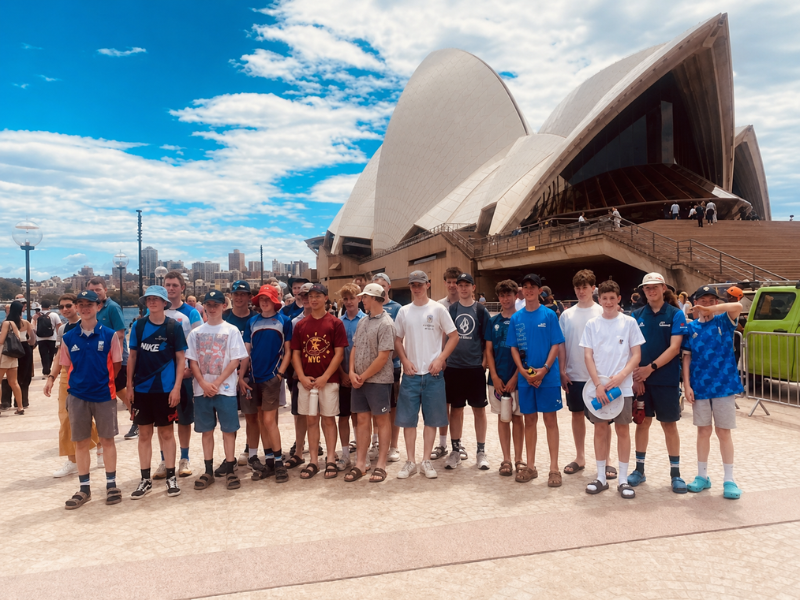
Learning From Australia's Diverse Communities
Many learning opportunities arise due to Australia’s cultural diversity. Cultural events associated with the traditions and history of Aboriginal people and Torres Strait Islanders may offer a variety of chances for exploring thoughts, narratives, places, and perspectives in an appropriate setting.
Such activities may assist older students to have discussions about matters of history, identity, and cultural preservation.
Quality is a significant issue when it comes to learning experiences. They should be respectful, appropriate for students’ ages, and conducted in a manner that makes students listen carefully.
Outdoor Learning Still Has a Place in Senior Years
Outdoor activities are considered more applicable to younger students, yet older students could benefit greatly from them as well.
Naturally, outdoor spaces allow for the application of the knowledge concerning such subjects as environmental science, geography, biology, sustainability, and climatic issues.
For instance, a study of the coast would mean researching erosion, ecosystems, human impact, or conservation.
The same way, research at the rainforest would be focused on biodiversity and habitat preservation.
This means that a student will see how various concepts are related and not consider them independently from each other.
Such outdoor learning can also foster teamwork and problem solving in case an investigation is set.
What Makes a Senior School Excursion Worthwhile?
Not all trips will hold the same significance for all groups of people. The best school tours around Australia usually have an objective in mind and are suitable for the students participating.
Prior to deciding on a destination, the teachers and administration can decide if the excursion is:
- Relating to their present learning program
- Giving opportunities for active participation of the students
- Suitable for the students’ age and level
- Instructing something they can discuss about later
- Beneficial in helping them in future studies or career planning
- Providing sufficient time to learn without rushing things
There is no need for a destination to be very elaborate to be significant. It can be more productive than having many other things crammed into a tight schedule.
Avoid Turning the Trip Into Another Classroom
There needs to be a balance between education and fun.
Even the seniors would find themselves enjoying themselves in learning something other than what they are used to in school.
If all the time spent during a journey is used up by educational lessons, the whole experience might start sounding like another class outside the school.
This does not mean that all the education lessons are to be stripped off.
They can be merged into the experience.
The guided activities followed by free observation, the workshops coupled with exploration, or presentation followed by discussion will offer students various approaches to learning.
Also, there are social aspects to learning together with other fellow students.
The Social Benefits Should Not Be Overlooked
One of the less obvious benefits of school trips Australia wide is the opportunity for students to interact outside their usual classroom setting.
Students may work with classmates they do not normally spend much time with. They may need to solve problems together, navigate unfamiliar surroundings, or support one another during activities.
These experiences can strengthen:
- Teamwork
- Communication
- Leadership
- Confidence
- Adaptability
- Problem-solving
For senior students, these skills are particularly relevant as they prepare for university, employment, and other environments where they will need to work with different people.
Making the Experience Accessible to Everyone
The trip should be such that all students have an opportunity to take part in it.
Some of the needs that might apply to senior students can range quite widely.
It could be physical needs, but there could also be medical, sensory, educational, dietary, or environmental anxiety needs that would have to be considered.
Thinking about these needs in advance will enable the organisers and teachers to make the necessary arrangements.
This includes ensuring that transport, venue, activities, breaks, food, and supervision arrangements are in place before the trip takes place.
Preparation Can Make a Big Difference
Students will be more engaged in the excursion when they know why they are going there.
Preparation should not necessarily include a great deal of work in the classroom. Just a brief discussion, reading, researching, or answering some questions can provide the students with some background information before their arrival.
The teacher may ask students to think about the following:
- What do you already know about this place?
- What would you like to learn about it?
- Which subjects from your lessons can you observe in reality?
- What questions can you ask there?
This will enable students to get some focus.
Reflection Keeps the Learning Going
The return trip does not have to mean the end of the learning process either.
A brief reflection at the end will allow the students to understand what they learned and to relate their findings to the information that they already have.
This can take many forms such as classroom discussions or short writing pieces. In the case of specific subjects, the students can undertake a project, presentation, or research assignment based on what they observed.
This is not meant to add work just for the sake of doing it; it is simply a chance for the students to figure out what they learned from the experience.
Why Senior Students May Remember These Trips
When you ask former students for memories of school life, many will mention excursions.
Now, that may seem surprising considering the regularity of lessons in a class environment, but there is an explanation. Excursions bring together education, movement, interaction with people, different environments, and direct experience.
A student might recall being inside a laboratory, seeing a native animal in its natural habitat, touring a campus of a university, listening to someone’s story, or working through a problem with other students.
This helps them remember the knowledge they have learned on the trip.
That is why it makes sense that students’ trips in Australia continue to be relevant even in the later years. Students not only gather memories but make links between them.
Planning With Purpose
The best senior trips begin by asking one simple question: What do the students stand to benefit from this experience?
Once you know that, you’ll have no trouble answering all the other questions.
Maybe it’s to learn about a particular career, to become more knowledgeable about a certain topic, to experience another culture, to become more independent, or simply to study somewhere else.
There isn’t any need for your purpose to be complicated; just valuable.
Conclusion
Excursions in senior schools have the ability to give the students something that classroom teaching alone might not be able to give.
Through career and university visits, as well as cultural, environmental, and subject-based excursions, the right kind of excursion will be one that teaches, fosters independence and self-confidence, and instills a sense of curiosity. As schools look for the next exciting Australia tours to take their students on, it might be helpful to start out with a clear purpose in mind.
Excursions give senior students opportunities to apply classroom learning, explore real-world environments, build confidence, and develop skills useful beyond school.
Career visits, university tours, cultural experiences, environmental programs, workplace visits, museums, and subject-focused field studies can all be suitable.
Workplace and university visits can help students learn about different industries, qualifications, career pathways, and the skills required for various roles.
Yes. Outdoor experiences can support subjects such as science, geography, and environmental studies while encouraging practical investigation and teamwork.
Connecting the trip with classroom learning, preparing students beforehand, encouraging active participation, and allowing time for reflection afterwards can strengthen the experience.
