Educational excursions at the high school level should not be limited to a mere day away from school. The right excursion can make it possible for the learner to relate what is being taught to something tangible through new eyes.
From rainforest ecosystems to marine environments, to cultural destinations, universities, research centers, and industrial visits, there is no shortage of destinations for educational excursions across Australia. Some of the most rewarding excursions will go far beyond the normal museum visits or tourist hot spots.
This guide attempts to uncover some of the most beneficial destinations for your learners.
Start With the Learning, Not the Destination
Many planning processes start by asking “where should we go?” It would be better to first ask, “what should our students experience?”
The chosen excursion must certainly be connected to the curriculum, but it doesn’t necessarily mean that there will be no difference between this activity and a regular lesson. Often, it is the opposite – an effective excursion occurs when the students can observe knowledge being applied in practice.
For instance, instead of just studying an ecosystem from books, a biology class may examine it in practice. Students in business classes may visit the working environment and interview people from the industry. Geography students could examine how a coastal environment is changing.
When comparing school excursion destinations Australia has to offer, consider:
- The subjects and topics currently being studied
- Whether students will actively participate
- The age and maturity of the group
- The accessibility and practical requirements
- What students can learn before and after the visit
This approach can lead to more interesting choices than simply selecting the most familiar tourist attraction.
Explore Australia's Natural Environments
Australia’s natural landscapes provide some of the country’s most valuable opportunities for high school learning. From tropical rainforests to marine environments and dry inland regions, students can study ecosystems and environmental issues in places where they are actually happening.
Rainforests and Biodiversity
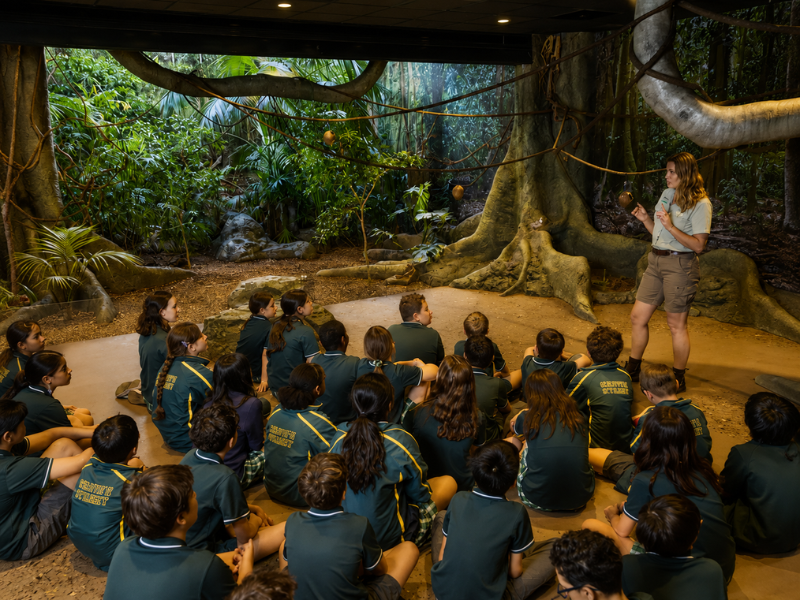
There are many ways that a rainforest tour can assist in teaching lessons about biology, geography, and environmental science. Students will learn firsthand about interaction between species by seeing real-life examples rather than simply reading about food webs and diversity in a textbook.
An area like the Wet Tropics in Cairns is just one of many places where students can learn more about rainforest ecosystems and conservation.
Students can get an even broader lesson if they are thinking about what happens when the ecosystem is affected.
What occurs when the ecosystem is changed?
How does mankind affect the biodiversity of the region?
What responsibilities come along with the management of natural environments?
Such questions can take the field trip from being just a scenic tour to being an educational experience.
Coastal and Marine Studies
If one is a student of marine biology or environmental science, there is always a wide range of activities that can be undertaken along the Australian coastline. These could include:
- Study of coastal erosion and the changing shorelines
- Study of marine ecosystems and food chains
- Human impacts on oceans
- Study of conservation and sustainability
- The relationship between communities and coastal environments
The Gold Coast, Sunshine Coast, and coastal areas around Sydney and Perth can all provide different perspectives on Australia’s marine environments.
Take Science Out of the Classroom
The trip does not necessarily need to be to a conventional museum. There are some other locations which can provide high schoolers with something valuable for their academic progress.
Universities and Research Centres
Visits to universities may allow students to better comprehend how further studies of science, engineering, medicine or technology will go.
Seeing laboratories, research centres or departments will enable students to grasp the idea that all subjects which they study now have practical application in real life.
This will be especially helpful for those who are going to finish high school soon. A university visit may help them think about:
- What subjects they might study after Year 12
- What different careers involve
- How research affects everyday life
- What university learning is actually like
The value is not only academic. Students can begin to picture themselves in environments they may have previously considered unfamiliar or out of reach.
Science and Technology Centres
The use of interactive science centers for secondary learners will be beneficial only if the activities provided match the learner’s age group. During a visit to such science centers, the learners can revise what they have learnt about physics, engineering, technology and human biology.
The important thing here is selecting appropriate programs that will challenge these older learners.
Make History Feel Real
History students in high schools are usually faced with events that have happened, political decisions, social transformations, and cultures. Going to the location where all these happenings took place gives them an extra perspective that books alone cannot provide.
Museums and Historical Sites
There are places in Australia where one can find exhibits related to the colonial past, migration, war, politics, and social change.
Canberra becomes especially important for those students who are interested in historical visits since there are places where one can study the history of Australia from various angles. There are such opportunities in Sydney and Melbourne as well.
The most important historical visit allows thinking critically rather than just answering the question of what happened. One should also pay attention to why it happened and who could be influenced by it.
Indigenous History and Culture
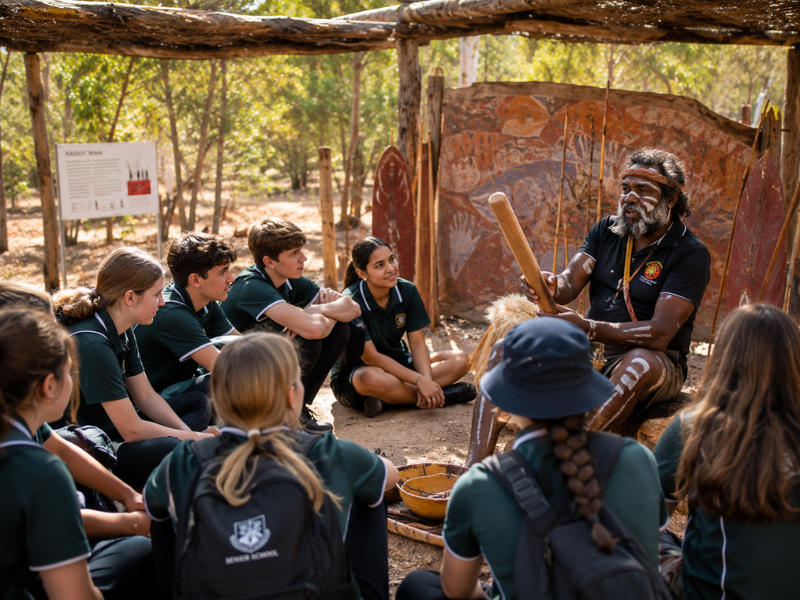
Aboriginal and Torres Strait Islander history must be studied carefully and with great respect. Schools can think about working with education that comes from Aboriginal and Torres Strait Islander teachers and organisations with the right cultural knowledge, when possible.
This can assist with understanding Australian history from an Indigenous point of view as well as learning about Country, culture, storytelling, and connection to place.
In secondary school, this can provide students with a chance to talk about how history is written down and who speaks within history.
Look at Australia Through a Geography Lens
Geography, at its core, deals with connections – connections between people and places, communities and environments, and nature and human action.
An excursion could provide students with an opportunity to grasp some of these connections better.
Using Cities as a Geographic Sandbox
The major cities in Australia are excellent real-life geography classrooms. Students could study urban expansion, transport, housing, population dynamics, sustainability, and land usage there.
A potential city-centered excursion would include comparison of various city neighborhoods, transport systems analysis, or urbanization impacts on the local environment.
The experience does not have to be elaborate. Simple observation of city layout and urban mobility could do the job.
Environmental Change
Australia’s varied environments also make it possible to explore the impact of climate and human activity.
Students might examine issues such as:
- Water management
- Bushfire risk
- Coastal development
- Habitat protection
- Waste management
- Climate adaptation
These topics can encourage students to think about environmental challenges as real issues affecting communities rather than distant concepts discussed only in textbooks.
Give Students a Look at Future Careers
It can also be a time for teens to contemplate their future beyond the classroom walls. Educational journeys that focus on careers allow students to explore different career paths and see firsthand how their classes will be used in the world of work.
Industry Visit
An industrial visit can give students insight into a particular career path. This depends on where the journey takes place and which industry is involved.
Possible areas include:
- Engineering and manufacturing
- Technology and digital industries
- Healthcare
- Aviation
- Media and communications
- Tourism and hospitality
- Environmental science
The experience is particularly useful when students can hear directly from people working in the industry. A conversation with a professional can often answer questions that students would not think to ask from a careers brochure.
University and TAFE Experiences
University or TAFE tours may also be a component of an Australian student travel experience. It will allow the students to consider their future education and see what the future holds for them after high school.
Students from years 10 to 12 may find this approach to be very practical because they would have the opportunity to think about their paths instead of putting it off.
Explore Australia's Arts and Creative Industries
Educational trips at the high school level do not have to limit themselves solely to scientific, historical, or career-related activities. They can also be conducted in the realm of the arts – and would be especially beneficial for students in visual arts, drama, media, music, or English.
An excursion to a large gallery could allow analyzing artistic techniques and underlying cultural concepts. An acting performance could provide examples for discussion on the nature of the narrative, characterization, and stage interpretation of the characters.
Students studying media could benefit greatly from a visit to the place where ideas were developed into tangible products.
This activity would be especially beneficial if there was enough freedom left for the students to develop their own interpretations of the visited exhibits or productions.
Choose Experiences That Encourage Student Participation
One of the biggest differences between a memorable excursion and a forgettable one is how involved students are.
A full day of listening can quickly become tiring, especially for teenagers. Activities that require students to investigate, discuss, create, or solve something tend to hold their attention for longer.
Look for opportunities where students can:
- Take part in workshops
- Conduct observations or fieldwork
- Speak with experts
- Work through practical challenges
- Ask questions
- Reflect on what they have experienced
Participation does not mean every activity has to be highly interactive. Even a museum visit can become more engaging when students have a specific topic to investigate or questions to consider.
Think Beyond the Major Capital Cities
There are some of the best places for a school trip in Australia that exist beyond the typical attractions found within the urban centres of the country.
The regions offer some opportunities that are more concentrated and perhaps even less crowded than the urban environment. There could be visits to a regional environmental education centre, investigations into the Aboriginal history of a particular region, studies into agriculture, and investigations of how smaller communities adapt to change.
A school trip could combine an urban centre with a regional one to give students a richer experience. They could visit a university or a museum and then visit a natural environment or a regional town.
Planning the Practical Details
Even for an interesting place, planning must take place. The needs of high schools are different from the needs of other schools, and when a field trip requires travel to various places and an overnight stay, it is not easy to organize.
While arranging a field trip, think about:
- Travel and transportation issues
- Supervision requirements
- Accessibility issues
- Need for accommodation
- Group size constraints
- Risk management issues
- Weather and seasons
- Support provided by the itinerary to achieve learning goals
Sometimes, it may be wise to avoid a crowded itinerary.
Making the Excursion Part of a Bigger Learning Experience
Field trips should not be isolated from other activities during the school year. Just a bit of preparation before the trip will allow students to realize the significance of the visit.
Students’ teachers could discuss the theme with them, provide some information in advance, or prompt them to formulate questions before the trip. Later, when the students come back, they can think about what they observed and how it relates to their expectations.
It does not necessarily mean that students need to perform a large-scale task after that. Group discussion, presentation, or reflection will be sufficient to make sense out of the trip.
The best educational excursions Australia provides are those which form a link between the experience and students’ general education.
Finding an Excursion That Fits Your Students
No perfect list of sites to take school excursions in Australia can exist since every student body has its specific needs and priorities. Therefore, an appropriate site to visit would differ depending on what students study and what stage of education they are at.
Some student bodies might have a desire to explore the rainforest while others may wish to see a university campus, examine a historic site, or spend a whole day discovering a marine ecosystem.
The key idea of selecting the destination is to provide some food for thought after returning to the educational process.
Conclusion
School outings do not necessarily mean just taking a break from learning at school. Students may get acquainted with new places, new outlooks, new career choices, and face some challenges in life, which will make learning more meaningful for them.
There are numerous locations in Australia to organize educational trips, as Australia is characterized by a great variety of landscapes, cultural venues, universities, research facilities, and industries. An ideal trip does not necessarily mean that it has to be to a place of interest that is known throughout the whole country or the most overcrowded one. What an ideal trip should do is give students reasons to look and think differently, to relate the things they are learning to life outside of school.
If you are thinking about organizing a school trip for the future, I would recommend visiting the destinations offered in Australia. You might find that an ideal one is close to your place.
Science centres, universities, research facilities, museums, cultural sites, wildlife programs, and industry visits can all provide valuable learning experiences for high school students.
Consider the subjects students are studying, their age, learning goals, travel requirements, and whether the destination offers opportunities for meaningful participation.
Yes. The right excursion can complement subjects such as science, geography, history, environmental studies, arts, business, and technology through real-world experiences.
Yes. University visits, industry tours, and workplace experiences can help students understand potential career pathways and see how their school subjects apply in professional settings.
Connecting the trip with classroom lessons before and after the visit can help students understand its purpose and reflect on what they learned from the experience.
